


 62 / 76

OCT. NOV. 2017
II
at CIC are continually monitoring in
order to always have the right product
at the right time.
And it is precisely of trends that we
speak in this latest issue of Qualitaly,
starting with the pseudo-cereals,
new ingredients rediscovered from
traditional cereals, for years neglected
and now in vogue as well as for
those intolerant to gluten or vegan,
even simply among those who have
decided to banish white flour from
their diet (service on page 50). But
why have white flours been put to
the sword? Our nutritionist Barbara
Panterna explains in the service on
page 54. Moreover, Italian food habits
have changed considerably in recent
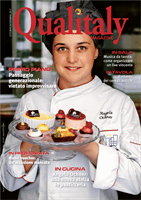
years. A very young pastry chef from
Trento, Angela Stine (cover story on
Pag. 22) knows something of this,
and tells us of ‘alternative ingredients’
and how to recalibrate the recipes
to create her sweet specialties. And
the young protagonist of our cover
story gave us the input to conduct
an important investigation into the
generational handover that our
country is experiencing where 23%
of the ‘leaders’ of family businesses
(also in the catering sector) are more
than 70 years old and often hand the
rudder to their children (pag. 14).
The result is very interesting and
invites careful reading of the whole
magazine in search of ideas and
insights useful for your profession.
Enjoy your read
By Lorenzo Morelli
AT PAGE 6
Qi News
By Maria Elena Dipace
Professions: in Italy
more and more
cooks and bartenders,
increasingly less
workers
In Italy there are more and more
cooks and fewer labourers: in fact,
those of the catering staff (cooks,
waiters and bartenders) are the
professions that recorded the highest
growth from 2013 to 2016 in our
country, with an increase of 127,000
units (+ 13%).
They follow porters and delivery
workers (+ 73,000, with a growth
of 18.3%) and lawyers (+ 31,000,
increasing by 14.7%). On the
other hand, the figures linked to
construction are declining: skilled
workers in home finishing down
by 63,000 (-14.5%), bricklayers and
carpenters decreased by 31,000
(-6.1%); also less doctors (- 18,000,
down 6.4%), printers (- 16,000, -29.3%)
and postmen (-15,000, down 8%). This
data emerges from the study by the
Statistical Observatory of Employment
Consultants (Osservatorio statistico dei
consulenti del lavoro) on the demand
for professions in the fourth Industrial
Revolution, presented at Lingotto
in Turin at the Festival del Lavoro,
organised by category.
Bars and restaurants,
“deposit scheme” for
water and beer bottles
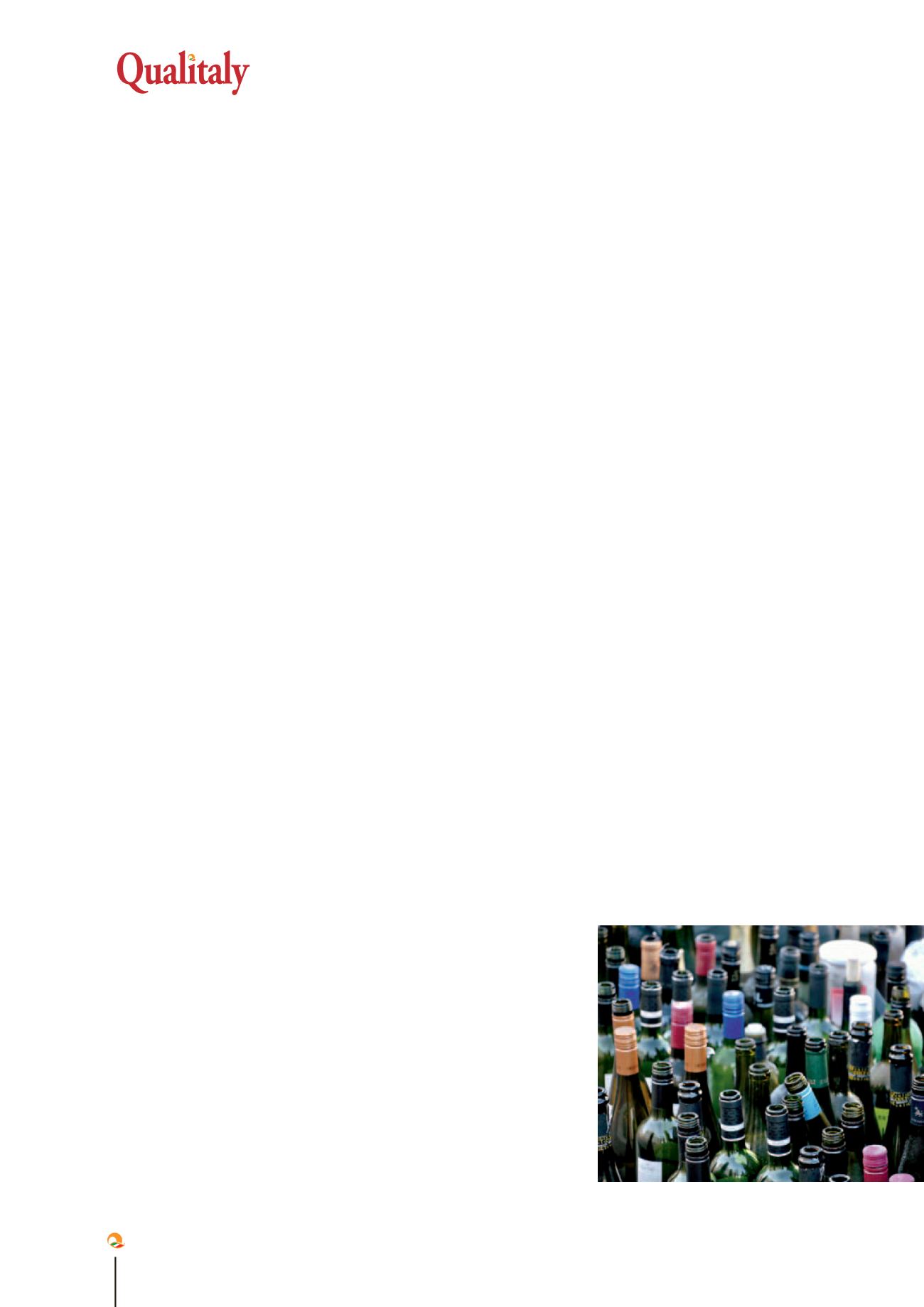
The experimental phase of the
“deposit scheme” system for bottles
of beer and mineral water in
bars and restaurants: a symbol at
the entrance will distinguish the
premises that have chosen to join
the experimentation, which lasts for
one year. It establishes the regulation
from the Ministry of Environment,
published on 25 September in the
Official Gazzette, which implements
the measure of “Environmental
Coordination” aimed at the
prevention of disposable packaging
waste through the introduction, on
a voluntary basis for one year, of a
return system for reusable bottles.
The regulations provide for containers
with of volume between 0.20 and
1.5 litres. “A country projected in the
circular economy like Italy – says the
Minister of Environment Gian Luca
Galletti – must be interested in a
practice such as the deposit scheme,
already successfully widespread in
other countries. This Decree – adds
Galletti – gives a chance to consumers
and businesses to discover a good
practice that helps the environment,
produces less waste and saves
money.” The aim of the “deposit
scheme” is to raise consumers’
awareness of the importance of
recycling re-use and reduce waste
production: the same containers –
more resistant glass, plastic or other
materials – can be re-used over ten
times before becoming scrap. Another
purpose of the decree, through the
envisaged monitoring system, is to
evaluate the technical-economic
and environmental feasibility of
the deposit scheme, in order to
determine whether the practice is to
be confirmed and possibly extended
to other types of product and other
types of consumption at the end of
the trial period.
Low cost test arrives to
expose food fraud
A simple and low-cost genetic test
able to expose food fraud has been
produced – in collaboration with the
University of Milano Bicocca – the
Nanobiointeractions & Nanodiagnostics
Group of the Italian Institute of
Technology (IIT), who presented a
study published in the International
journal Angewandte Chemie.
The simplified genetic test, called
NanoTracer, was developed by the
research team led by Pier Paolo Pompa
and allows genetic traceability of food,
identifying genetic barcodes, DNA
fragments that uniquely identify a type
and provides, in just over two hours
and with minimal instrumentation, a
colorimetric result easily interpreted
with the naked eye. “Thanks to this
technology - explains Paola Valentini,
IITZ researcher and author of the study
published on Angewandte
– It is also possible for unskilled
personnel to recognise in a short time
if, for example, we are in front of a
perch or a pangasius or pure saffron
or something mixed with other less
noble spices. In the case of saffron we
are able to identify small quantities,
close to 1% of false spices. “
The test is applicable to any food,
has a cost of about 10 euros and
requires a simple instrumentation.
The technology has already aroused
the interest of a number of prominent
players in the food field, assessing
MAGAZINE