


 74 / 76

FEB. MAR. 2017
XIV
true that the “domestic formats” are
not adequate for the “large numbers”
of public establishments, but it is
also true that specific products are
made for the catering industry with
dedicated formats.
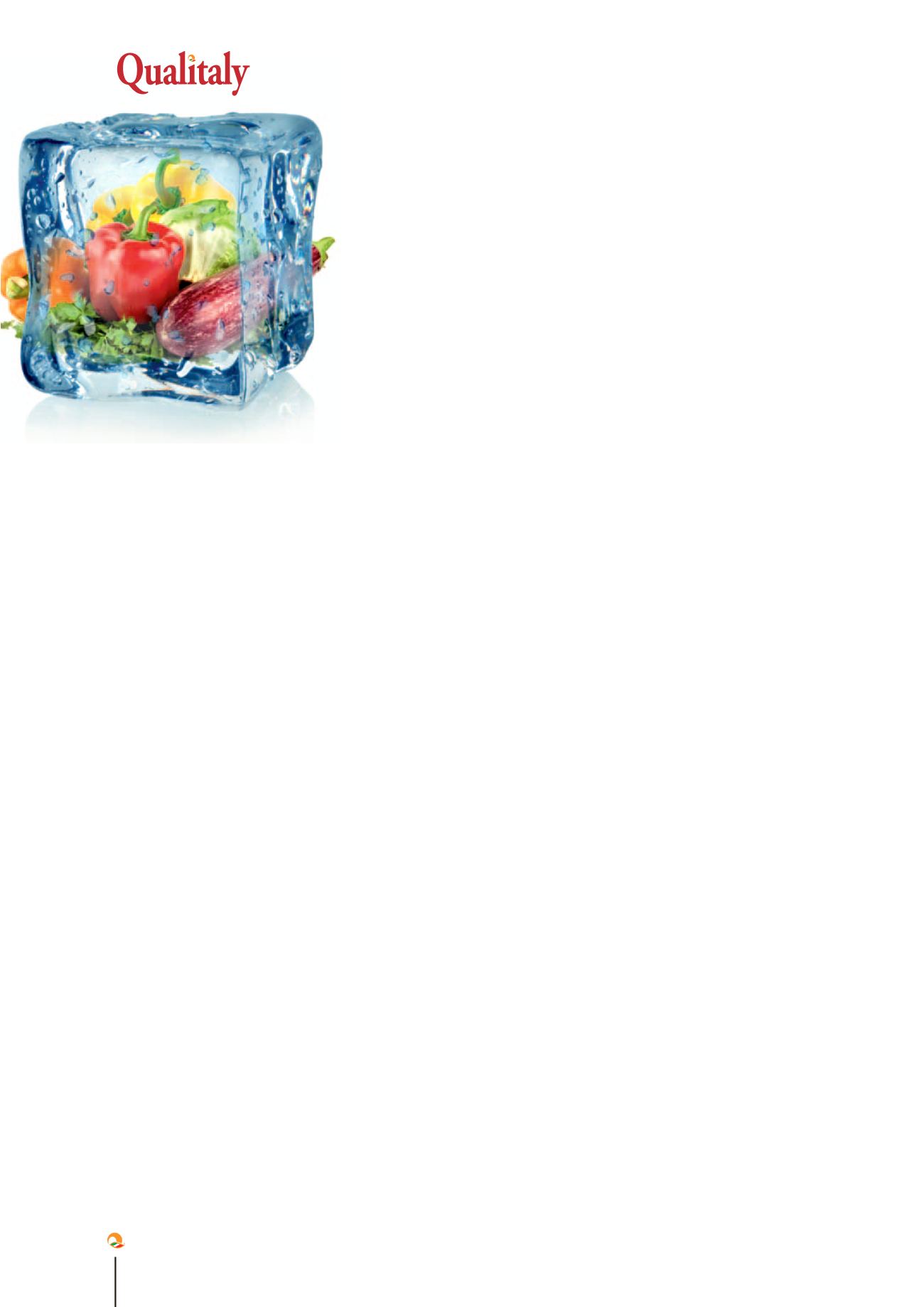
Then why not try the advantages
of frozen products also away from
home?
The restaurateur should begin to live
with this as a plus for his restaurant.
Today the restaurant must know
the origin of the ingredients it uses
in the kitchen (traceability); frozen
food gives the operator this type of
guarantee. On the other hand, it is
also important that the products used
in the catering industry are different
from those intended for general
consumption. So yes to semi-finished
products, vegetables, meat, to deep-
frozen fish products also in the
restaurant.
“Freezing is absolutely the best
method of preservation: for the
maintenance of both the organoleptic
and nutritional properties - explains
Renato Collodoro, patron chef of
several restaurants as well as author
of the book ‘The dream of opening
a restaurant and not to close it
before you wake up’ - What makes
the difference is the quality of the
original product, and the freshness
at the moment it is frozen. The
opportunities are obviously tied to
the menu choices that you want to
adopt. A varied menu that follows
the requests of the customer, cannot
do without the use of products out
of season, and consequently must
resort to frozen food. But if we want
to also consider a seasonal and
traditional menu, for example that of
farmhouse cooking, it is right to think
that the surplus of the harvest from
the garden can be frozen and used
again later to continue to make good
soups. And also mushrooms which
are collected in this period, those
which are leftover, do we throw them
out? Restaurant management requires
common sense; after all it’s what we
also do with the domestic budget”.
“Education: this is what the catering
sector needs. When we talk about
education we also need to explain
to staff about the correct use of
equipment - explains Fabio Tacchella,
chef and owner of the restaurant
Antica Pesa of Stallavena (Vr), and
consultant gourmet and instructor in
the industrial food sector - technology
allows you to speed up a lot the work
in the kitchen, but very few people
are aware of the real advantages of
this equipment. If someone makes
incorrect use of this, he compromises
the genuineness of the product. There
should also be the “Blue Badge” for
“do it yourself” (many are those who
don’t freeze fresh products properly).
So why not use the “industrial” frozen
products also in the catering industry?
The latter allows the availability of
a wide range of ready to use foods
throughout all seasons of the year,
which guarantees a considerable time
saving for those who work in the
kitchen as well as maintaining the
nutritional value and organoleptic
properties of the food. You just
need to know how to enhance this
creatively. Then again is this not the
chefs job?”.
______________________________
BOX
The frozen fish market triggers
training for members
Frozen fish is more often on the
tables of the restaurants. A choice
dictated by the awareness on the part
of the chef that the frozen product
maintains the same characteristics
as the fresh, with the added value
of having a product of undoubted
quality. But what is essential for
this type of products is the exact
knowledge of the frozen fisheries
industry is frozen both by the
restaurateur, but especially on the
part of the supplier. And it is this
concept that the Italian Catering
Cooperative has wanted to work
on recently by establishing a
two-day conference, 14
th
January
at Marghera, and 21
st
January in
Mestre, during which Stefano Del
Vecchio, the CIC fisheries marketing
representative, met three members of
the cooperative, Siqur Spa, St Anne
Srl and Tre Esse Srl, by assessing
with them the market for frozen
fish relative to trends, national and
international consumption and
differences between fresh and frozen
fish. An educational course that has
proved to be very useful and that has
been met with great approval by the
participating members.
______________________________
AT PAGE 46
Finally, it’s Sake time!
The alcoholic beverage that arrives
from the land of the Rising Sun
finally used with skill and creativity
by the barman Gian Nicola Libardi
By Maddalena Baldini
Let’s clear something up immediately.
Sake, the typical Japanese drink, is
neither a distillate nor a liqueur. It’s
an alcoholic drink born from the
fermentation of rice and it’s not true
that it is only drank hot. Actually,
served at 8-10° it exalts aromas and
perfumes making it a pleasure in
combination with traditional dishes
and otherwise. The confusion that
surrounds the symbol product of
the Rising Sun speaks clearly about
how little Sake is known and drunk,
despite the proliferation, especially
in large cities, of Japanese restaurants
(or similar) that should be specialised
in the diffusion and knowledge
of sake. In short, a little like what
Italian Restaurateurs should do when
it comes to Italian wine, territory
and food and wine pairing. Despite
a hesitant presence on the table
(you can place it alongside an entire
Japanese menu without considering
it just to finish the meal, as happens
today), Sake has attracted the
attention of Italian mixing, bringing
about respectable results, involving
internationally renowned names
such as Gian Nicola Libardi, elected
2017 Sake Master after a contest
against other important industry
professionals.
YOUR FAME AS A BARMAN
OF DISTINCTION GROWS
EXPONENTIALLY. A WELL
DESERVED SUCCESS
CONSIDERING THAT, RECENTLY,
YOU RECEIVED ANOTHER
AWARD. DO YOU HAVE ANY
PARTICULAR STRATEGY TO
PREPARE FOR A COMPETITION?
I never follow strategies and never
make valid programs for every
situation. Each competition, in which
I decide to participate, has its own
MAGAZINE