


 68 / 68
APR. MAY 2016
XVI
Champagne, its characteristics, its
centuries-old history have a high
degree of knowledge of the world
and are appreciated for the wine
distinctive character and for the elite
product allure that make it almost an
icon of a certain way of understanding
the relationship with wine. Not
surprisingly, UNESCO as a World
Heritage of Humanity has included
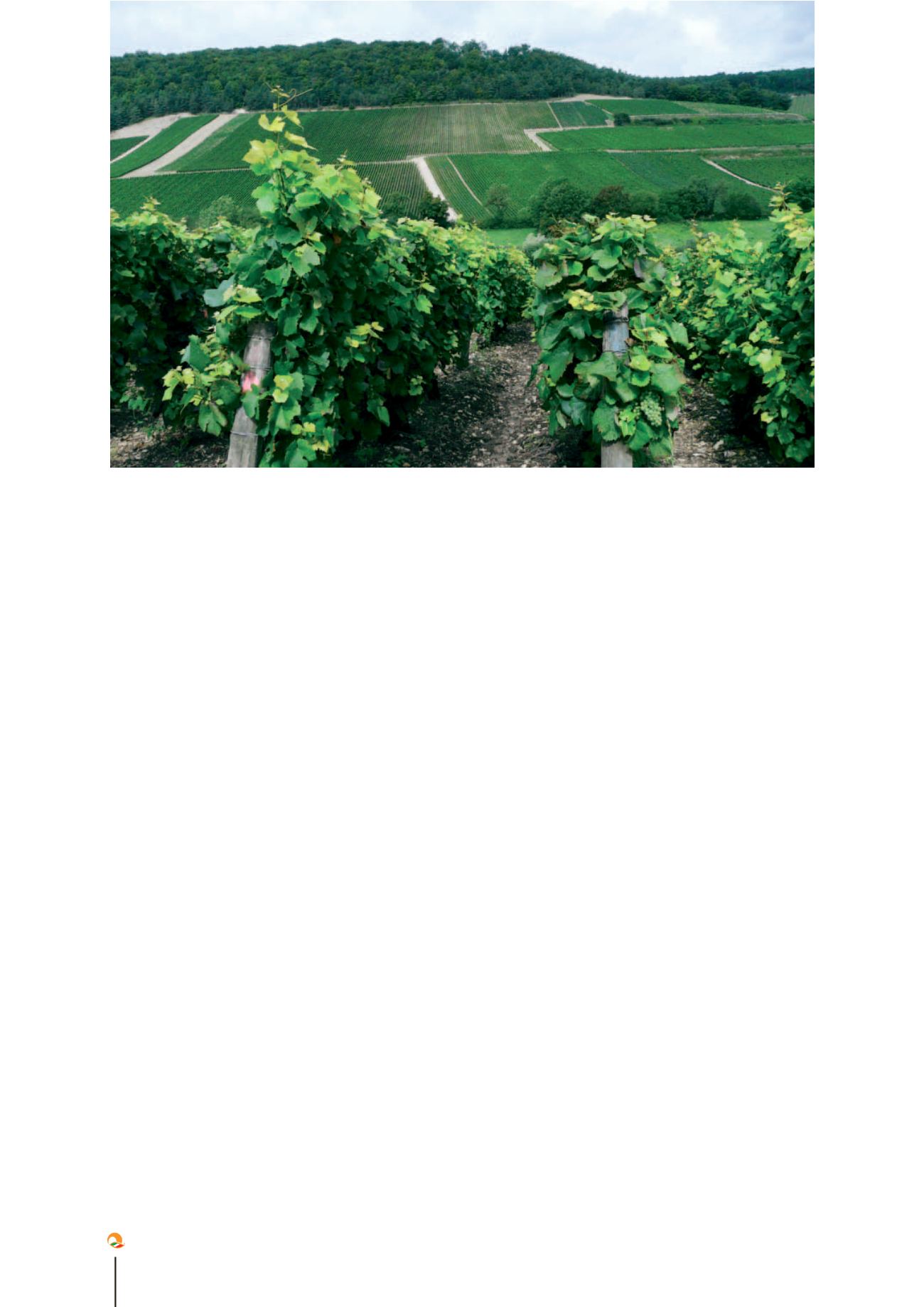
the Champagne region in 2015,
recognizing the universal value of
the birthplaces of production and the
global spread of the eponymous wine.
NEW IMAGE.
Also in Italy, a
country where in a surge of
nationalist autarchy, the Champagne
has always been seen in competition
with sparkling wine, a relative
less noble, at least in the collective
imagination, the cousin across
the Alps. Of course the economic
crisis has a little ‘ticked the wings
of imports of Champagne in our
country, even if that wine product is
not remaining seated on its laurels
and its glories, but is pursuing a
worldwide customer, changing skin,
innovating (within the limits of
the possible) production methods,
sometimes distorting the traditional
image, almost monastic, which
accompanied it so far to speak to
the young generation of a world in
which the festive imagery is proving
to be the same at all latitudes.
MANY SOULS.
Those are sleeverate
bottles with shocking colors, or an
image that follows the canons of
contemporary elegance. Champagne
2.0 is the bearer of a winemaking
vision certainly more opens to new
influences (organic or biodynamic
cultivation of the vine) whose
lighthouse guiding sustainability,
even in a rapidly changing climate
scenario that is distorting sediment
traditions over the centuries. With
regard to the production structure, a
range of unprecedented productive
nuances, between big maison
and small producers, it is capable
of giving an interpretation more
compelling to the concept of terroir.
Basically three grape varieties used
for the production of Champagne:
Chardonnay, Pinot Nero and Pinot
Meunier, for a product that is the
sum of many souls and no longer
content with the bang and the
toast, but explores more deeply the
pairings with food and represents a
wine “throughout the meal.”
Dom Perignon Vintage Blanc 2006
Dom Perignon
www.domperignon.comFeatures
It’s a classic, with its floral aromas
and candied fruit on the nose and its
rich and complex flavor, silky. The
finish is long, with mineral notes
Moët & Chandon Ice Imperial
Moët & Chandon
www.moet.comFeatures
Wine from Pinot Nero (40-50%), Pinot
Meunier (30-40%) and Chardonnay
(10-20%) with dosage 45 g / liter,
is distinguished from the historic
fashion house production for its
bottle sleeverata in white / silver and
a power mode with ice, fresh fruit or
other aromatic ingredients (lime peel,
cardamom seeds, mint leaves)
Veuve Clicquot Rosé
Veuve Cliquot
www.veuve-clicquot.comFeatures
The Pinot Nero (50-55%) dominates
for this Champagne which maintains
the same character of the famous
“yellow label”, but which is offered
with a softer balance, thanks to the
assembly of red wines from selected
grapes. The nose is fine, with hints
of raspberry, strawberry and cherry,
very fruity harmony that is also
found on the palate, with surprising
intensity.
Mumm No. 1 Black
Mumm
www.mumm.comFeatures
Mostly Pinot Meunier for this
Champagne characterized by a
distinctive image that recalls the
world of racing (the line is called
Victory), and a fruity taste
Jacquart Brut Mosaique
Champagne Jacquart
http://www.champagne-jacquart.
com/fr
Features
The Chardonnay grapes (35-40%)
gives vivacity to this wine, low-dose
10g / liter. The nose dominated by
the notes of fresh fruit and orange
blossom; in the mouth gingerbread
and honey with a fruity and
persistent finish.