


 62 / 68

APR. MAY 2016
X
accompaniment to any type of dried
fruit, is superb with prunes and figs.
Gold
over 30 months of seasoning,
cheese as dry and grainy, with notes
of dried fruit and spices, Parmigiano
Reggiano most character.
Pairings: With either red wines
of high body and structure both
with white dessert wines and
meditation. Try pairing with honey
and the perfect combination with
the traditional balsamic vinegar of
Modena and Reggio Emilia.
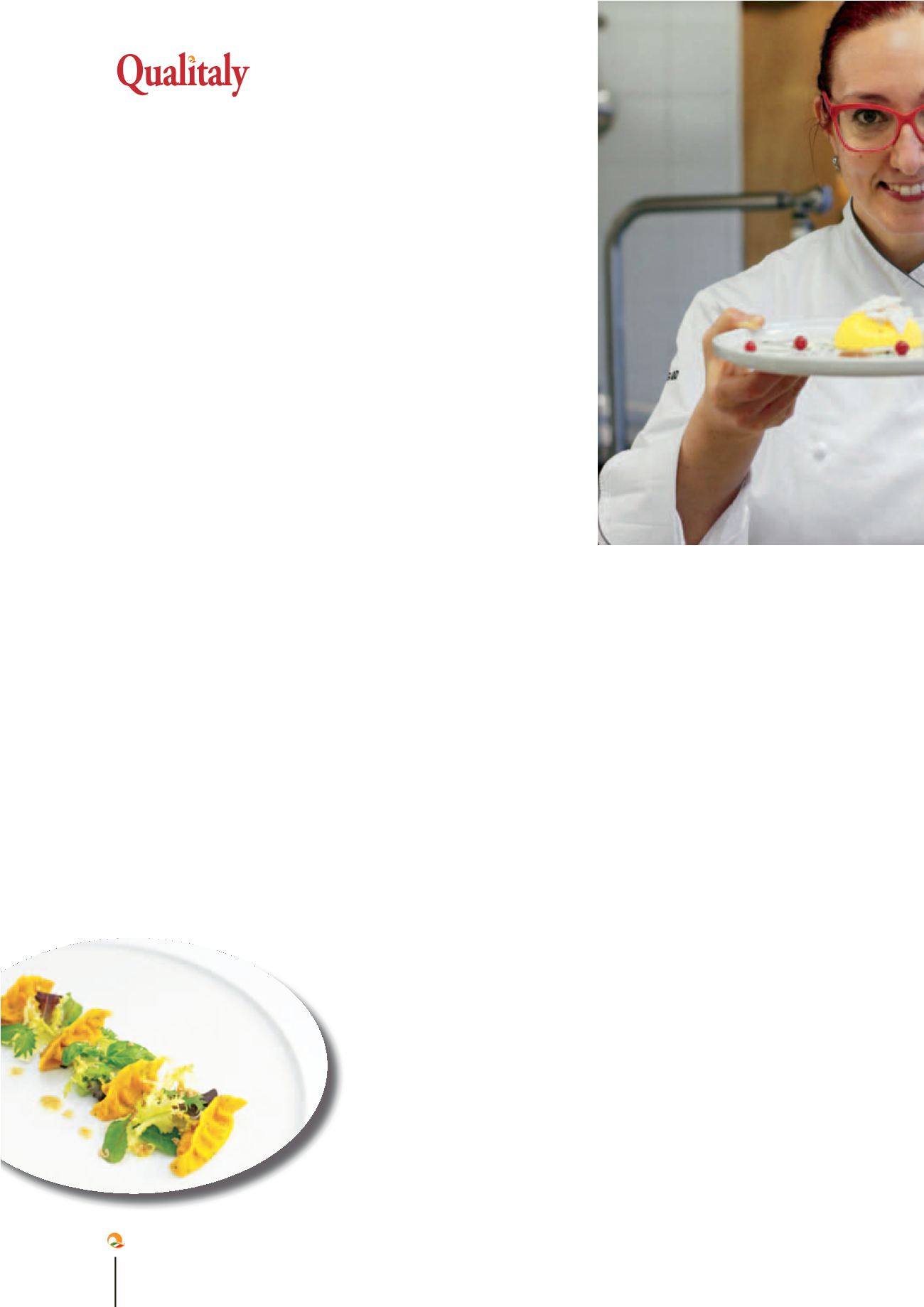
PASTA WITH WARM HERBAL
TOPINAMBUR ON SPRING SALAD
RECIPE OF Herbert Hintner,
Restaurant zur Rose, San Michele
Appiano
Ingredients
For 4 people:
300 g of Jerusalem artichoke; 40 g
of Parmigiano Reggiano; 3 sprigs
of thyme; 1 clove of garlic; salad
for garnish; extra virgin olive oil;
Apple cider vinegar; toasted sesame;
for dough ; 175 g flour 00; 75 g of
semolina flour; 1 whole egg yolks +
7; 20 g of chopped thyme; 15 g finely
chopped parsley; 10 g of rosemary,
finely chopped
Preparation
In a bowl or in a mixer, combine
the egg, egg yolks, herbs, flour and
knead until dough is smooth. Wrap
the dough with plastic card or vacuum
and put to rest in the refrigerator
for about 3 hours. Meanwhile boil a
pot of water with garlic and thyme.
Cut into small pieces and place the
artichokes in water scented with garlic
and thyme. Simmer until it softens.
Once cooked, pass it to the mixer
combining the extra virgin olive oil
to obtain a smooth
puree.
Roll out the dough so thin and form
the ravioli with artichoke filling.
In a pan heat a little tablespoon of
extra virgin olive oil, lightly sauté
the tortelli and cook in salted water.
Once you come to the surface, collect
the ravioli with a slotted spoon.
In a small bowl, emulsify the olive
oil, the vinegar and toasted sesame.
Arrange the dumplings on a platter,
garnish with salad and shavings of
Parmesan cheese then season with
the dressing with sesame seeds.
AT PAGE 28
A chef will not save
the world
We’ll talk about the experience of
Aurora Mazzucchelli, chef of the
restaurant Marconi, in Rwanda for
international solidarity projects.
Reflections on the figure of the third
millennium cook, not only theatrical
but pan subject of responsibility
by Pietro Cinti
Cut the noodles with the machete.
It is the last frontier of the spectacle
in the kitchen, including improbable
media situations, pseudo castaways
islands or cooks desperately
searching for an identity that holes
“screen”, but a real situation, in
which Aurora Mazzucchelli, chef of
Ristorante Marconi Bologna has come
to find during his travels in Rwanda,
a country torn by civil war resulted in
a terrible genocide, today placed on
a difficult future of peace, including
the aftermath of the conflict and the
now chronic effects of widespread
poverty. A symbolic parallel, born
from the desire to bring together two
worlds so far apart, Emilia and her
famous pasta and Central African
country, driven, however, by the
need to improvise a dinner “Italian”
without the necessary tools at hand:
“there simply were no knives fit for
purpose - explains candidly Aurora
- then the machete was the only
option. And then I look back on this
thing I was pleased to reflect on the
fact that the instrument by which
hundreds of thousands of people
were murdered or mutilated, serve
this time to do good, to cook, to give
a smile and a moment of sharing to
diners. “
Experience, that of Mazzucchelli,
born in the wake of economic aid
given to a Rwandan orphanage,
that far from being a sop to clean
conscience, a soul washing operation,
was a stepping stone to the reality
of this corner of Africa capable,
almost at the same time, to express
suffering and hope, in a mix that
leaves its mark in the heart. And that,
for us Westerners, is called “Africa
sickness”.
“I always thought - says - to want
to help out, as I was taught by my
parents, workers with head on
his shoulders and strong ethics to
guide the choices. So, after having
supported economically this project, I
decided to go on-site, in line with my
busy schedule, to see with my own
eyes, to understand more that reality,
driven by a curiosity and a need to
learn that guides all my life and my
professional experience.”
Some, however, might argue that
your worlds are in contrast: on
one side of haute cuisine, luxury,
meals for hundreds of Euros; other
people who are struggling to find
food everyday...
“This is a thought that always
accompanies me: how to live with
these two worlds, namely the kitchen
of consciousness, the attention to
detail, and solidarity with the hungry.
Often our industry is associated
with the waste, the unnecessary
costs to get strange and exotic
raw materials, so it is certainly not
the best ambassador for the fight
MAGAZINE