


 63 / 68

APR. MAY 2016
XI
against hunger and poverty in the
world. However, I believe that many
colleagues being born a new way of
living the profession, with the search
for beauty that combines not only
between glitz and opulence, but that
stems from a search for respect. You
can make a great dish even with
humble ingredients if you respect
them, even with leftovers, perhaps
leveraging its aesthetic vein and
infusing much of him in the pot”.
What is the legacy of solidarity
initiatives such as those that she is
going through? Does he believes
that the creative process of a dish
is influenced by these experiences?
“Yes, no doubt. In that case, the
influence is more on the human side
than on the real culinary traditions.
In Rwanda, as in almost every
country in the throes of a severe and
prolonged poverty, the cuisine is
based on few local products, mainly
cereals, potatoes and legumes.
Hearty and “fill up belly”, a bit ‘like
polenta represented the power in
our poor countryside for centuries.
So it is difficult to have influences,
suggestions to be transferred to his
own creations. Conversely, under the
human profile, see these situations,
where every day there must be no
flight of fancy and the food available
is extremely respected and not
wasted, certainly changes a little ‘how
to see things, even to return to Italy.”
In recent years the chefs have
occupied the center of the media
scene, a bit ‘like rock stars in the
90s. What is your opinion on this
phenomenon?
“A chef cannot save the world. This
is the starting point of my review of
this phenomenon. But, of course,
the grip on public opinion can serve
to transmit a message that is not
just hedonistic but make people
think about the condition of a part
of the world. The chef of the third
millennium must know to combine
many schemes and synthesize them
in a single work. The most important
aspect is, without doubt, a strong
work ethic, addressed to the respect
and balance. The chef has to make
some choices according to their
own responsibilities, but it can also
convey a positive message to society,
especially to the younger ones.”
Finally, what it is the thing that, in
his experience, we in the West can
learn from the inhabitants of the
developing countries?
“In relationship to food of Rwandans,
I hit the naturalness. We live in a
society in which the naturalness is
a plus that must be paid; in some
countries it is poverty that inhibits
adulteration. In agriculture and in the
kitchen everything is natural, without
the use of chemical. However, even
this is changing rapidly and, they too,
are tempted by industrial agriculture
to maximize yields. Instead, they
should capitalize on their naturalness
as an element of diversity compared
to the West and protecting their
amazing biodiversity of monoculture
nightmare.”
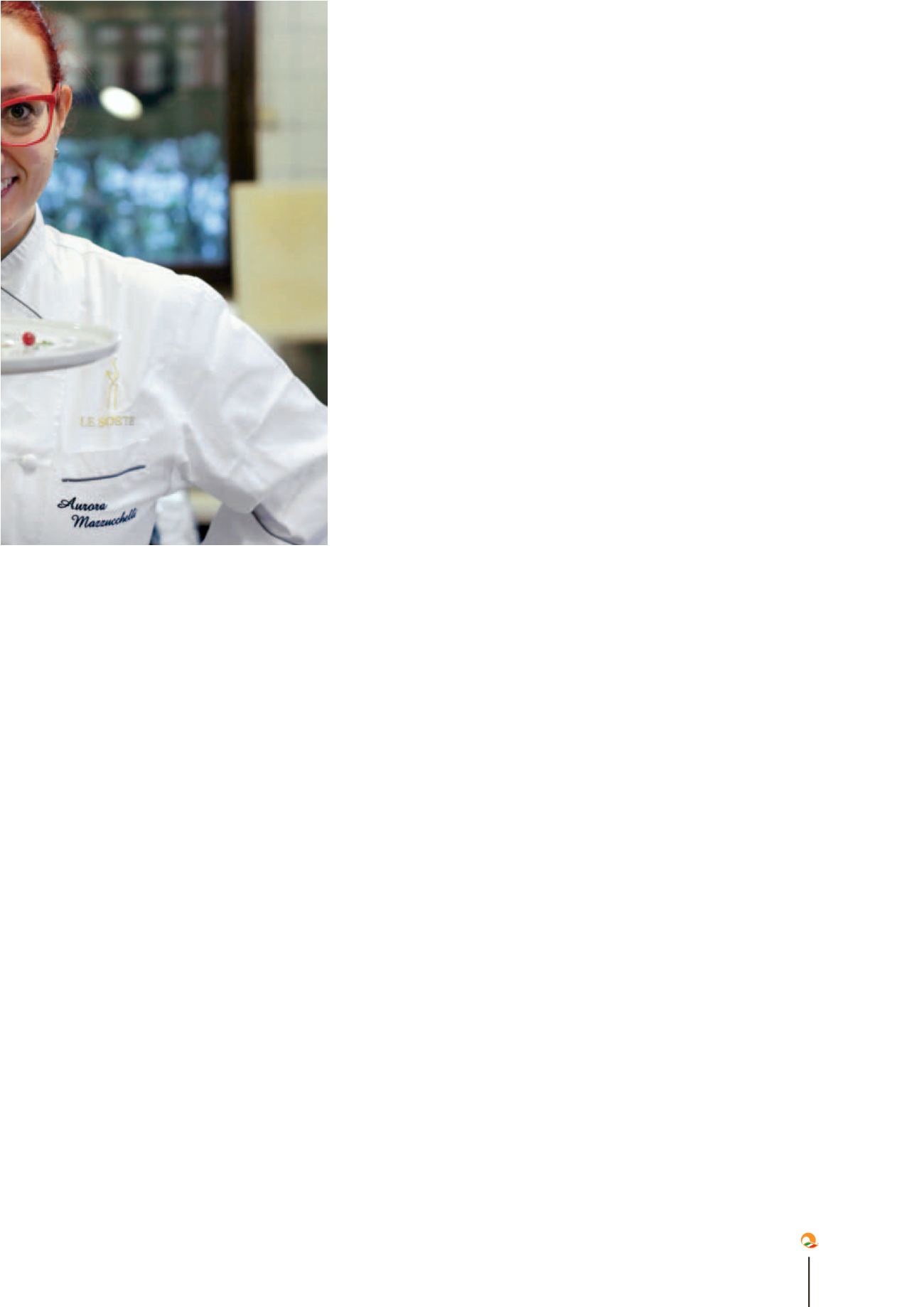
The recipe by Aurora Mazzucchelli
Sweetbreads nutmeg and thistles
Ingredients for 4 people
500g of fresh veal sweetbreads
10gr of white vinegar
100g butter
Salt
Pepper
1 bunch parsley
Cardi at will (usually 1 thistle)
Nutmeg
Garlic
EVO oil
1 bay leaf
Preparation
Putting to drain the water, ice
and vinegar 500g of fresh veal
sweetbreads, this for about 4 days.
Drain, remove cuticles and
unnecessary.
Cool with water and ice; put them
in a bag in a vacuum with butter,
pepper and a bay leaf.
Cooking in thermostatic water to
80gradi for thirty minutes.
Soak the chopped nutmeg for one
night with water, and then move
using the extractor also nocturnal
infusion liquid.
After having trimmed and washed the
thistles make strips, sauté with garlic,
parsley, oil and salt. Cover with water
and cook for thirty minutes.
Heat the cardoons with their sauce
cooking
Review the sweetbreads in a pan with
butter and another finish browning
with drops of nutmeg extract.
Season with salt and pepper and
serve with the soup thistles.
AT PAGE 34
The humid breeze
that gently cooks
The steam oven allows obtaining
excellent results by operating at
temperatures and lower times with
respect to a traditional one.
by Elena Consonni
Healthy, light, food and
environmentally versatile, steaming
has ever more popular even in the
professional kitchen. For some time
now the technical equipment of a
professional kitchen also includes a
steam oven.
The differences between the
traditional cooking in the oven and
the steam are substantial, since
the operating temperature. “While
in a dry air oven cooking takes
place well above 100 °C - explains
Roberto Carcangiu, chef, educator
and president APCI, which closely
follows the theme of technological
innovation in the professional
kitchen and provides advice and
training on these issues - with the
steam cooking is faster and at lower
cooking temperatures. The steam is
more efficient than hot air. The steam
ovens allow to set the temperatures
(from 35-40 °C to 120 °C) and the
cooking time; also the temperature at
the heart, with the appropriate probe.
But not only changes the operating
temperature, the firing mechanism