



 59 / 68

DIC.GEN 2015
IX
brand Qualitaly particularly suitable
for the preparation of risotto. Sensory
analysis milled rice comes with grains
characteristic of the variety, color
characteristic of the type of processing,
odor typical and characteristic taste
without extraneous notes or signs of
infestation, current or recent, from
insects and rodents; or smell moldy; or
smell of smoke; or rancid or stale; or
any other smell, color or flavor intense,
unpleasant, though not due to a perfect
state of preservation.
It is packaged in heat-sealed vacuum
bags placed in cardboard boxes from
1000 grams. Shelf life, 26 months from
date of packaging.
AT PAGE 24
6MWSXXS [MXL
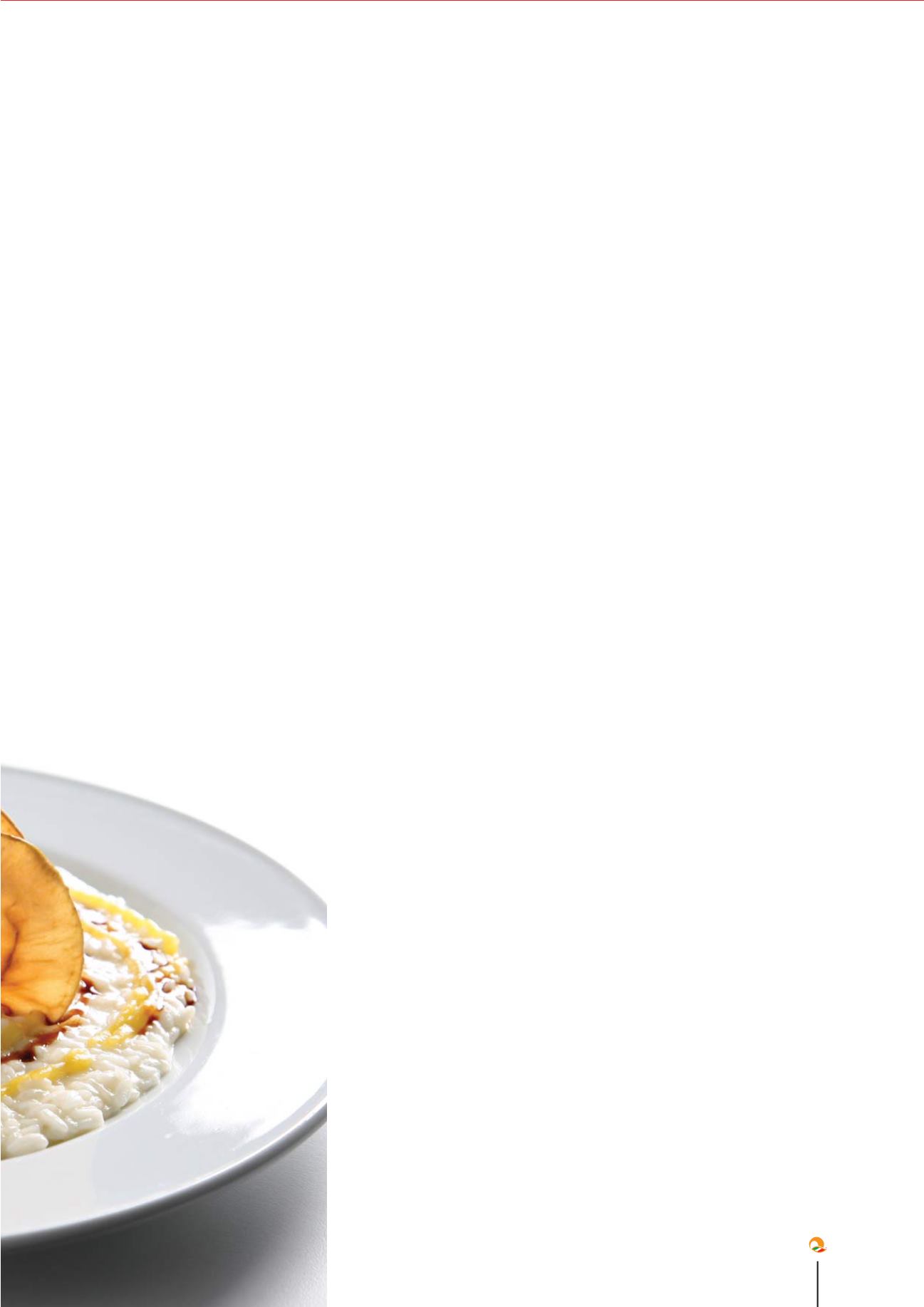
WEYGI PEXI TIEGLIW
VIHYGXMSR SJ
1EVWEPE ERH ETTPI
GLMTW
Cook Author: Danilo Angè - Milan
Ingredients for 4 people:
G Carnaroli rice 320;
Vegetable stock;
G shallots. 100;
Peaches g. 400;
Cinnamon stick n. 1;
Marsala virgin l. ½;
No golden apples. 2;
G powdered sugar. 50;
Parmigiano g. 100;
G butter. 80;
Extra virgin olive oil;
Salt and pepper
Procedure:
Peel the shallots, cut into julienne, put
it in a microwave container, cover with
oil and cook for about 7 minutes. Allow
cooling, strain and storing the oil.
Peel peaches, cut them into pieces,
cook in the oven for 4 minutes with the
cinnamon and blend them to the mixer.
Depriving apples cored, cut into thin
slices, sprinkle with icing sugar and dry
them in the oven.
Pour the Marsala wine in a saucepan
and let it reduce to low heat until a
quarter of the initial weight.
Put the rice in a ceramic container
with oil flavored with shallots, add the
stock and cook in the oven for about
9 minutes, stir in butter and Parmesan
cheese.
Pour the rice into serving dishes and
complete with peach salsa, with the
reduction of Marsala and the cips apple.
AT PAGE 26
8LI HIWMVI JSV
+SVKSR^SPE KVS[MRK
8LMW VE[ GLIIWI WIQM GYVIH MW
XLI QSWX TSTYPEV LIVF MR XLI
[SVPH ERH MW KEMRMRK WYTTSVX
MR EPP QEVOIXW 8LEROW XS
XLI JEGX XLEX MX MW WXMPP HSRI
F] LERH ERH MXW QER] YWIW
MR XLI OMXGLIR XLI GLIJW EVI
PEYRGLMRK MX EKEMR
BY ANNA MUZIO
What is the cheese that knows no crisis,
and even earns praise and connoisseurs
up and down the boot (and abroad)? It
is the Gorgonzola. Started from a town
on the outskirts of Milan, Italy’s most
famous blue cheese has earned third
place in the time between cheeses from
cow’s milk in the panorama of Italian
DOP, after the two more famous grains.
It is also the only cheese that has not
suffered declines in 2013, has indeed
seen slightly increase production. And is
also known outside the country: in fact
figure in the top four cheeses exported
abroad.
Gorgonzola is a raw cheese straw-
white, with green streaks due to the
process of marbling the formation of
mold. It is produced with pasteurized
milk from stables located in the area of
origin (some provinces of Piedmont and
Lombardy), with the addition of lactic
acid bacteria and selected molds. The
seasoning for at least 50 days for the
sweet type and up to 80 days for the
spicy kind.
ON THE TABLE AND IN THE
KITCHEN. In catering has now
surpassed the boundaries of local
consumption in Piedmont and Lombardy
(where you can not miss on the plate
of cheese) to extend throughout the
boot and all types of restaurants, from
pizzerias to star.
“There are three types of Gorgonzola
- explains Fiorenzo Santini, CEO of
Speca Alimentari of Verbania, one of
the provinces affected by the production
and true connoisseur of the product -
the dry, cured for at least two months,
much used by pizzerias because wets
less pasta, the medium used for the
processing of first dishes and fillings
in restaurants and the creamy, that is
proposed in the cheese board. The
consistency is essential, and essentially
depends on the curing but also on the
type of enzymes used. Connoisseurs
know that the quality of Gorgonzola
should have a creamy consistency, but
should not be too soft; should neither
stand, nor assign or slipping too much. “
How is presented in the table? “A quality
within Gorgonzola cheese is tasted
halfway through - Santini continues
- after the first of the most seasoned
and fresh and tasty. According to me it
should not be accompanied by honey
or jam, because it has a uniform taste,
cheese is a living alone.”
Gorgonzola has few real “competitors”;
in Southern Italy, however, is often used
in pizzerias, the Bergader, a German
cheese marbled green with a very strong
taste that once was often “doomed”
to gorgonzola. “But those who feel it
understands the difference and change,
as he told me a pizza of Naples,” said
Santini.