



 62 / 68

DIC.GEN 2015
XII
look. “I think you get in the room with a
jacket immaculate, tidy and stretch - he
says - is the best presentation possible
for a chef. Notify attention to hygiene.
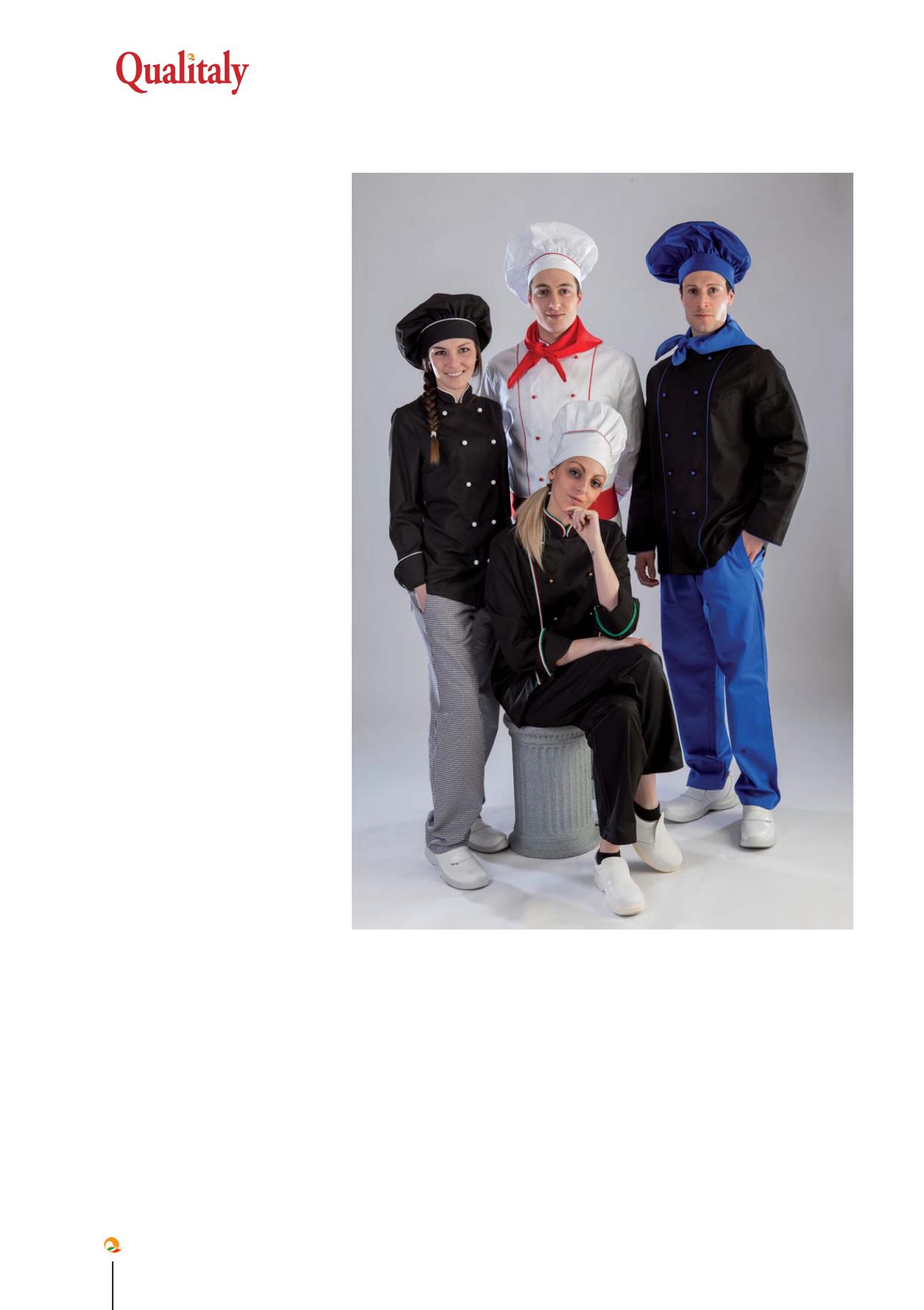
I think the colored jackets, which
like many of my colleagues today, do
not communicate the same way these
values. The dark, if anything, can fit for
pants, still covered by the white apron. “
Montiglio is traditionalist also regarding
the headgear. “Although today go
far sachets, also in paper, and the
bandana - he said - I am for the classic
tall hat. This is not only to be tied to a
traditional image of the cook, but also
once again prefer the comfort. The
space between our head and the top
of the cap means that there is a bit ‘of
refreshment more. The kitchens are very
hot, we chefs have typically a pretty
strong character, and even more if we
overheat the head.”
REGULATIONS. Anyway, beyond
fashion and personal taste, what are the
rules on clothing for the chefs? “Actually,
very little,” says Katiuscia Consonni,
consultant Haccp. “The 852 simply say
that the clothing should be appropriate.
In the absence of more information is
good then refer to the “old” 283 and its
implementing decree (no. 327 of 1980).
It says here that the work wears in the
laboratories of food preparation and
food industries should be light colored.
It makes no specific reference to the
restaurants, but even excluding them,
and certainly on a light jacket stains
are more evident than in a dark and is
therefore natural to wash more often.
Only with respect to the headdress is
specified that must contain the hair
entirely. The model, of course, chooses
the individual concerned. “
No specific even closures. “If you opt
for the buttons - continues - advice
to use blue, because no food has this
color. This way if you accidentally break
off and end up in a pan or in a dish
is immediately visible and cannot be
confused with the ingredients of the
recipe.”
As for the washing of clothes, this
procedure must be provided within
a HACCP plan. You can go to an
industrial laundry, maybe that can
issue certification to ensure that the
sanitation of the head, but you can also
do wash the uniforms at home. “In this
case - ends - employees are trained on
the fact that the uniforms are sanitized
and therefore washed at 90 ° C or using
detergents containing disinfectant.
In any case must always be washed
separately and never with the rest of the
laundry of the house. Finally it should
be noted that the uniform should be
worn only when entering the workplace.
The dressing room must be equipped
with double compartment lockers; one
should be kept in civilian clothes, the
other uniforms in use and the spare.”
Maximum freedom for waiters
The provisions, however imprecise
the law, regarding those involved
in the handling of food not being
administered, or the waiters. In this
case, the only rule to follow is to change
clothes once you arrive at work. It is not
even required to cover their hair.
The feet, comfort and safety
Kitchen work requires long hours to
go up and also the lower ends deserve
proper attention. “The optimal footwear
- says Paolo Montiglio - are in my
opinion accident prevention regulations
designed for the food industry, because
they protect the foot from bumps, drops
of knives or other incidents that may
happen in the kitchen. It is not true that
they are heavy, are now studied in order
4(.(A05,