



 64 / 68

DIC.GEN 2015
XIV
because it could be decisive.
PAINT SPACES. Another issue is the
color of action, some repainting surfaces
have a reduced cost and the final effect
is certainly very effective.
The color should be consistent with
the color range of the brand to be able
to decline in a coherent picture. The
surfaces to repaint should be chosen
with a spatial criterion to emphasize
the size of the room. In spatial terms,
the colored vertical surfaces have the
ability to open or close the environment.
Depending on the layout, it is also
possible to give weight to thematic areas
as attractive points at the banks of the
distribution of food or bar counter.
In the case of Slowpoke EspressoCafe
the designer has recovered wood waste
to dial decorated walls and the front
of the bar counter, the result is a new
image: with just managed to get a
quality image.
Then there is a working hypothesis
common to modern spaces, industrial
or historical is to “dismantle” literally
existing finishes bringing to phase rustic
walls. The transaction does not have
excessive costs and if you want you can
do independently. The walls without
plaster and paint, maybe beaten with
effects of light and shadow in the case
of modern spaces are very fashionable,
in the most traditional, however,
emphasized the historical origin of the
place.
Very often taking off increases the
aesthetic affect because one of the most
common mistakes is just to add.
A simple and functional idea, is also the
one of using mirrors, the depth effect
can help in cases of sizes restricted to
those bar counters facing the windows
on the street. Reflect the outside when
it is quality light and could give some
suggestion.
Floor and ceiling elements are expensive
to replace. Sometimes it may involve
variations on the plants. A possible
alternative could be set in a second floor
on the first overlay existing checking
thicknesses. Alternatively a concrete
casting colored paste may not cost
much, but with a colored resin you get
up with the costs because it implies
greater labor.
FURNITURE AND TABLE. As for
the furniture, tables and chairs, the
replacement is complicated in many
cases, may be enough to change
the position of the layout to obtain
the feeling of novelty. You can also
change only the ground but even more
beneficial is the solution to replace
the tablecloth. If the table allows it,
you can remove the tablecloths that
have a traditional image outdated and
put runners at the sessions. There are
products on the market in disposable
tissue or tear sold in rolls that can be
changed at will, maybe with seasonally
changing menu.
The color range of these elements is
very wide and also plans to match
the napkins. The effect is elegant and
effective.
The details are important, replace the
usual condiment cups or an object that
belongs to the world of food but usually
have different feature is a sophisticated
detail and low cost.
AT PAGE 44
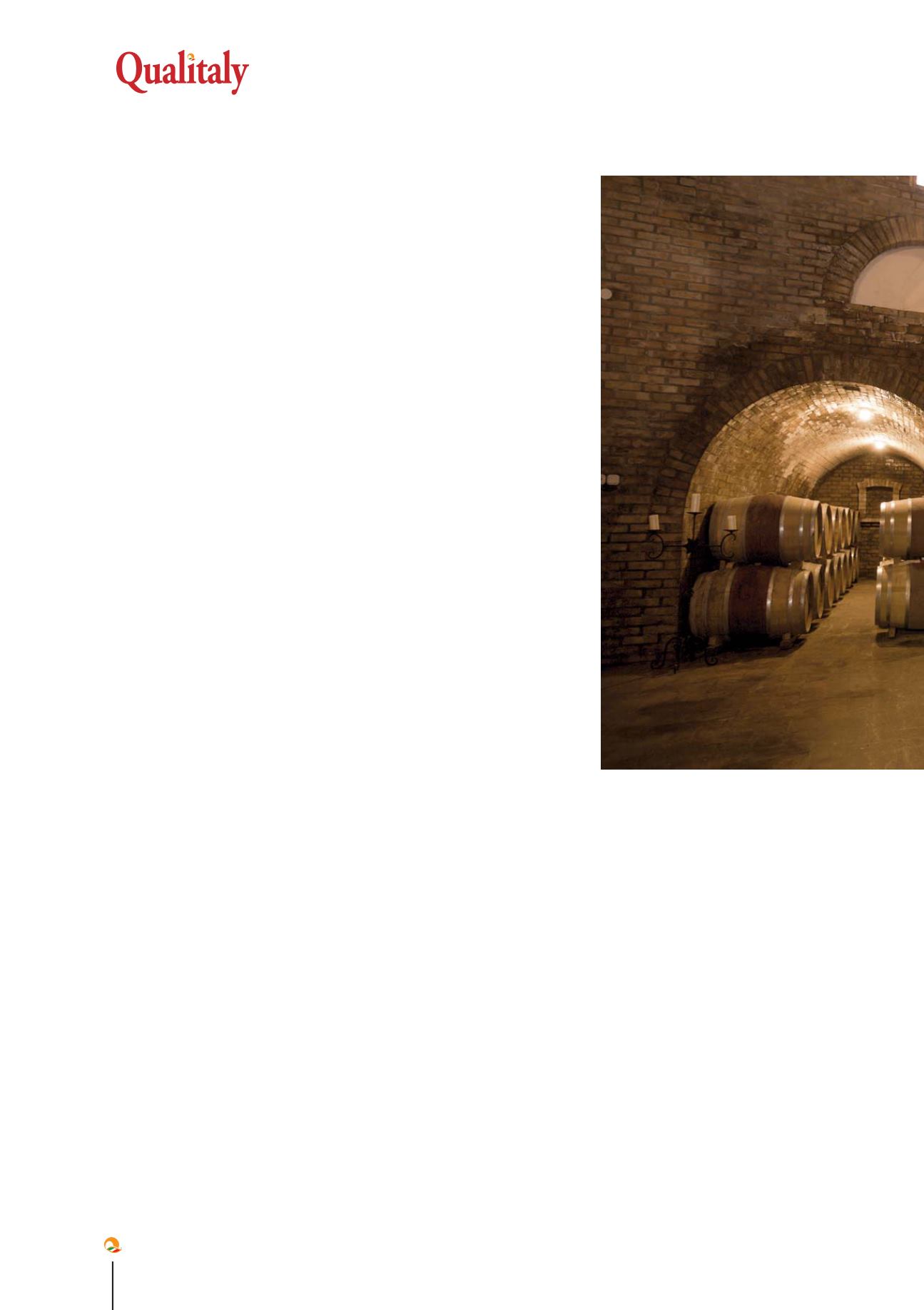
8LI GVEHPI SJ -XEPMER
[MRI
8LI 4MIHQSRXIWI [MRI MW XLI
VIWYPX SJ E PSRK LMWXSV] XLEX
LEW WIIR XLI TVSXEKSRMWX
MR ER EVIE WYMXIH ERH XLEX
XLI TVSHYGX LEW XYVRIH MRXS
±JPEK² JSV XLI QEHI MR -XEP]
MR OI] I\TSVX
BY PETER CINTI
It is one of the most important wine
regions in the world, some names
bring the chills in the back of fans
scattered to the four corners of the
planet, the production structure is broad
and multifaceted, including historic
companies, backed by a couple of
centuries of activity, and a ferment new,
young, that takes the best from tradition
and reinterprets it with contemporary
sensibilities.
Piedmont is the cradle of the Italian
wine culture and its wines, Barolo
down, have a solid reputation, at home
and abroad and a secular tradition
that has settled a peculiar culture.
The first traces of wine production in
Piedmont, as is natural in our country,
dating back to Roman times, but all the
regional history is permeated by the
nectar of Bacchus, here soon become
a channel of business for the nobility
and high agricultural bourgeoisie, with
typical pragmatism that characterizes
the Piedmont. “It’s not just for the
products of the earth, but for a whole
civilization”: Lamartine quoted the
motto of the Agricultural Association
Subalpina, founded in 1842 by the
Piedmontese nobility with the support
of King Carlo Alberto Savoia to improve
agricultural techniques, including lives
while its Turin hosted the first congress
of the Italian wine, in 1875, with the aim
to bring order in the wine production of
the newly formed Italian.
TRADITION’ SIPS. Today Piedmont is
home to over 45 thousand hectares of
vineyards in the hills and foothills in
the bands, which employs 20 thousand
wine farms for over 3 million hectoliters
of wine produced each year. Twenty
indigenous varieties are produced (first
of all Nebbiolo) for 16 DOCG wines and
42 DOC. But beyond the numbers, wine
has helped shape the landscape in the
places most important wine, the Langhe,
Roero, Monferrato, the hilly and Alpine
foothills of the Torinese and northern
Piedmont. Reaching a segmentation
productive unprecedented, with wines
4(.(A05,