

 68 / 76

DEC. JAN. 2018
VIII
restaurants or other local activities to
manage the storage of ingredients in
a correct way.”
Aperballe serves fried fish, fresh or
frozen, as appropriate and depending
on the availability, to accompany the
wine served in the wine store. “On
average we serve 50-60 portions of
fried fish per day – explains Luxardo
– even more at weekends and during
the tourist season. We serve them
in cones of greaseproof paper to eat
directly on site or, for those who
want to consume them at home,
in takeaway packs. Our advantage
is that we are equipped with low
temperature fryers, which fry at
140°c instead of the typical 180 °c, in
this way the oil does not burn and
remains clear throughout the day and
we can guarantee a higher quality
and safety to our customers.”
You can learn a lot from the collected
statements, first of all that street food
is not – just like any other activity
of administration – a matter to take
lightly. We must carefully take care
of the supply, storage of goods
and logistics because the activity is
profitable and guarantees the health
of the consumer. I mean, it’s not for
the unprepared.
______________________________
BOX
FOCUS ON
The local Street Food business is
relatively recent. What is good to
know is that there are several CIC
members who have seized this new
opportunity.
The pkaces of consumption involved
in this service have indeed been
indicated by some of our members,
namely Agenzia Lombarda Srl (Novate
Milanese - MI), G.F. 2 Srl (Levanto –
SP), Salso Carni Srl (Salsomaggiore
Terme – PR), Siqur Spa (Capriccio di
Vigonza-PD).
______________________________
AT PAGE 22
IN DEPTH
You want
to be American
From Basilicata to the conquest of
America: an impossible adventure?
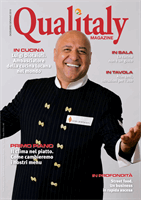
No, just call yourself Luigi Diotaiuti
and bring the best of regional (and
Italian) culinary tradition in the
suitcase without ever forgetting
simplicity and passion
By Maddalena Baldini
Friendliness is explosive. And
this is a fact. On great skill in the
kitchen nobody dares say a word:
guaranteed. A gastronomic colossus
of ‘Made in Italy’ that, even though
he has been working for several
decades in Washington, he’s talked
about in Italy and around the world.
A kind of superhero who, instead of
Superman’s uniform, wears the chef’s
hat and tunic.
He is Luigi Diotaiuti, from Basilicata,
who has had the strength and
courage to leave his land of origin
to embark on a new path: his
consistency and his courage have
been proved right.
Today, active from 1996 “from the
fireworks” of the restaurant Al
Tiramisu – recognised as absolute
excellence of Italian gastronomy – is
the Ambassador of Basilicata cuisine
around the world, as well as being
awarded prizes and recognition
worthy of a Hollywood star. For some
time, from Al Tiramisu, he joined
another locale (again in the heart of
Washington) with the evocative name
of ‘Aperto’.
“I want to break down all the walls
with my love for my work - declares
chef Diotaiuti - a recipe of Basilicata,
perhaps reinterpreted with a touch of
creativity, is able to make everyone
agree”.
From Basilicata to America, when
did this adventure begin?
When it comes to big jokes... this, in
a certain way, has been one. I arrived
in America on 1st April 1990: April
Fools? Well, today, I remember that
day with pleasure! In fact, I dreamed
of going to the great land of America
not to work but for a holiday: in
those times, the most coveted
destinations for the profession of
chefs were France, Switzerland,
beautiful Sardinia and also London,
especially in the winter months.
Instead Washington welcomed me
and it is here that I started my own
real career. Just think, in almost
30 years, how many things have
changed: now America is the most
desired destination for those who
want to have a great success in food
and catering!
What was your learning curve?
Arriving from a country and simple
family background: growing up
between the fields of Lagonegro,
more precisely in Macilimieri, in a
family with 6 children, 3 girls and
3 boys. Fundamentally, my parents’
teaching... they watch me from up
there. A life in contact with nature,
breeding 250 goats, 100 Padolica
cows, cultivating the vegetable garden
with beans and wheat: just think that
in the house, the only things that
were bought were sugar, salt and
coffee, everything else was produced
by the family. One day, a dear friend,
told me that he had joined the Hotel
Institute of Potenza. Intrigued and
attracted by this world I decided to
subscribe to the one in Matera. It
was 1976. I followed the advice of
my mentor Gerardo Novi and the rest
speaks for itself, a beautiful story
spent overseas.
How did you reconcile a regional
cuisine like that of Basilicata with
completely different customs and
traditions?
The undertaking was not at all easy!
Abroad only regions such as Tuscany
and Piedmont, and pizza are well
known. In Washington I was one
of the pioneers of contemporary
Italian cuisine; after a lot of work and
many proposals I gained confidence
and credibility on the part of the
clientele, in this way, a little at a
time, I made the delights of Basilicata
cuisine known. With satisfaction
I can say that I have reached the
desired goal and great recognition:
in April last year I received the title
of International Ambassador of
Basilicata cuisine.
What were the biggest difficulties
you encountered?
The first days were hard. This is
because, in the 90s, when I arrived
in America, they knew very little
about the ingredients used in Italian
cuisine and in the Tricolour tradition.
In practice I spent most of my time
in the restaurant explaining to the
clientele what the radicchio was, how
MAGAZINE