

 71 / 76

DEC. JAN. 2018
XI
“We both learned to cook from our
mothers and grandmothers. The
basics are built experimenting and
making mistakes. Innovation is only
possible in this way
- they explain together - today the
revolution in the kitchen should
lead to recipes and healthy products
related to the territory. The fortune
of a young chef is linked to his own
interest and character. However, the
international market continues to
seek out emerging chefs, possibly
known faces, more than cooks, but
this doesn’t discourage us. With
today’s advanced techniques, you can
get yoirself about and unleash your
creativity. Take local produce, which
is fine, but apply it only if you have
an ingredient of excellence, otherwise
it becomes fashionable. You have to
learn to share.”
Regional Food and wine education
Between shows, interviews, culture
and taste as a sign of the richness
of the territory and in the pleasure
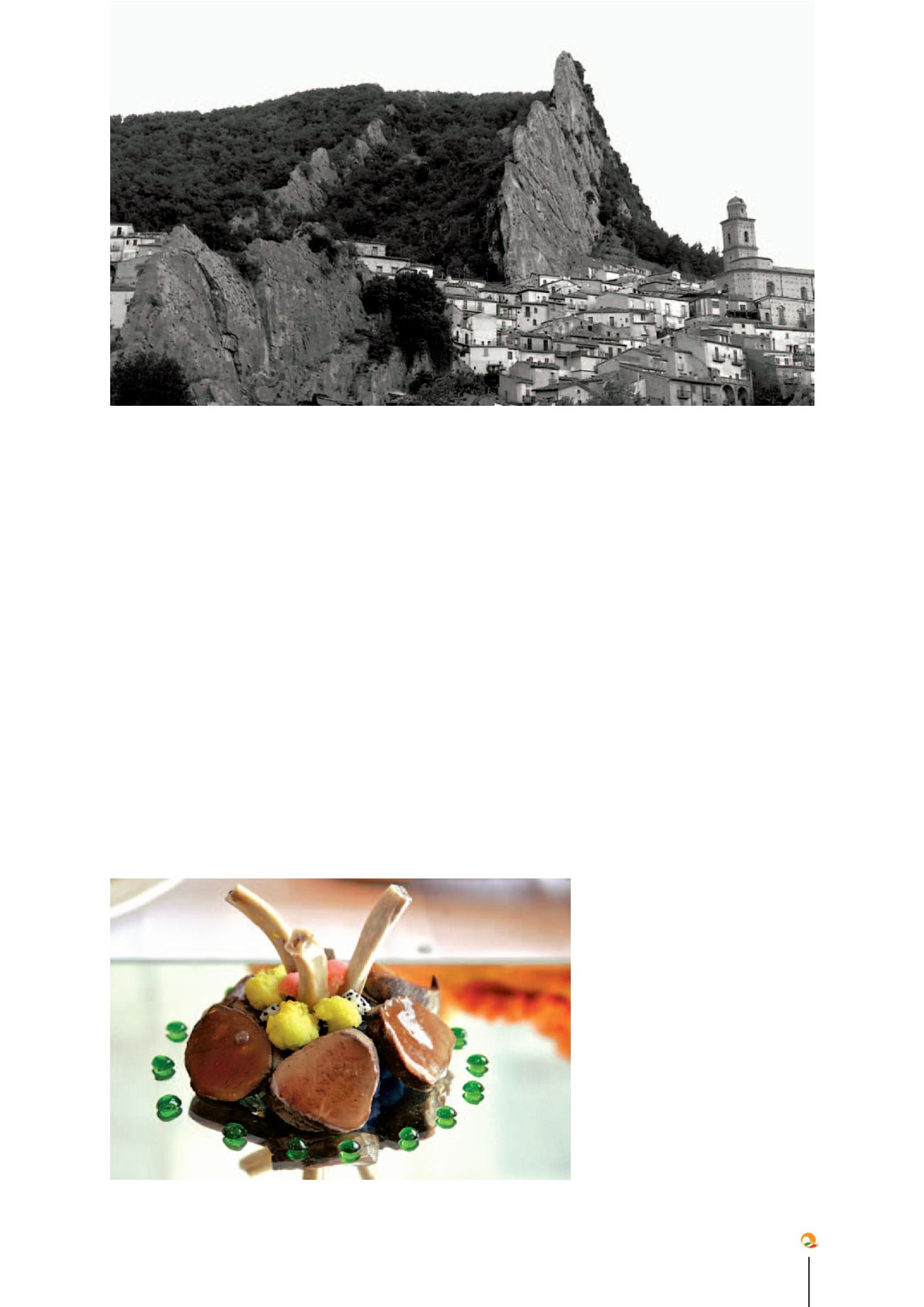
of conviviality, the Festa dei Cuochi
di Villa Santa Maria was held in
mid-October, where the catering of
the future was consolidated as seen
by young professionals who leave
Marchitelli thoroughly prepared
by the teachers. This confirms
that regional food and wine and
education in Italy can make a
difference. A successful edition,
with record figures, with more
than 10,000 people attending the
scheduled events, including show
cooking, interviews, tasting moments
and the inevitable dinners in the
main squares to testify that another
Italy is keeping itself insistently
and stubbornly busy. A protagonist
also in America, the city of Villa
Santa Maria and its festival, thanks
to an overseas connection with the
chef Luigi Diotaiuti (our cover in
this issue of Qualitaly). This is an
important testimony to the culinary
and professional excellence of ‘Made
in Italy’. From Washington, Diotaiuti
stressed how important is the
collaboration between events in a
world that goes at the speed of light.
And Professor Leonardo Seghetti,
expert in water in cooking, from
the stage of the village main street,
has highlighted an element often
ignored. “We take into consideration
a pasta dish, its origin. Most of
what’s in it is water. But what kind? I
challenge anyone to cook with water
from several taps and from different
specialised mineral brands and
notice the final difference. We always
look for things that cost less to save
money but in the age of excellence
this discussion touches everything
and so what does it mean?”, asks
Seghetti.
Meanwhile William Zonfa of the
Aquila restaurant Magione Papale
warns that “catering is projected for
overseas. The authenticity of the
territory is essential to make its roots
known. The visitor who comes to our
restaurants wants to experience not
only the visited territory but also the
rest of Italy.”
Andrea Di Fabio, commercial and
marketing director of Cantine Tollo,
one of the largest wine-growing
areas in the central southern region,
has emphasised the intrinsic quality
of the product and in particular
Montepulciano D’Abruzzo: “It is a
flexible wine when matching with
food.”
Of the same stock, and of the
same thought, is Tonino Verna:
“Montepulciano, certainly, but also
Pecorino, Passerina, Trebbiano and
indigenous varieties previously
abandoned: everything should be
evaluated and revalued. I have been
attending the Festa dei Cuochi for
many years, the school actively
participates in the event, it is an
important means for the primary
sector and the development of food
and wine; the wine culture is essential
to avoid the desertification of the
territory: here the young people