

 74 / 76

DEC. JAN. 2018
XIV
and maintain a minimum level of
information) or if it is preferred to
make allergen management a strong
point, turning it into an element
of action distinct from that of the
competition. On average, every
allergic person who chooses a
restaurant brings with him six others.
In a company of friends, if there is an
allergic you are going to meet their
needs. So if a restaurant pushes the
fact that they pay particular attention
to the needs of the allergic, it becomes
established in a growing and attentive
niche market. To do this one must
be able to successfully manage the
problem.”
First Step: Planning
Allergen Management does not start
with what you write on the menu.
“The world of allergies – remark Sarti
- speaks the same language as that
of microbial contamination. It is not
by chance that allergen management
should be included in the HACCP
protocol. Planning and organising the
service is the first step in setting up a
serious proposal for allergy sufferers.
It is not necessary to have separate
rooms, but it is necessary to manage
the tools and equipment correctly. The
ideal would be to have a closet (with
all its equipment) dedicated to each
type of allergy, or at least to the most
important ones, but it would become
too onerous. Use a particular colour
code for cutting boards, knives, pots....
to be used only for allergy sufferers,
it can help to manage the service with
reasonable security.”
Properly sanitising equipment and
surfaces, following the procedures
indicated in the self-regulation
plan, is important to prevent
cross-contamination. Periodically
the sanitisation process should be
checked, to verify that it is followed
properly. Of course, in a restaurant it
is not the case of getting to carry out
(as happens in the food industries)
validation tests searching for allergenic
proteins, but a restaurant can also
be equipped with tampons or kits to
detect residues of dirt, which have
sustainable costs.
The preservation, both of the
ingredients and of the semi-finished
products used in recipe preparation,
is also very important, both for
cooked dishes as well as those not
served immediately. “In both cases
– he continues – the products must
be kept closed in their packaging
and labelled, if possible separating
them into different categories. For
each product must be indicated the
list of ingredients, even if they are
dishes prepared in the kitchen. I
would like to point out that the flow
of information between ingredients
MAGAZINE
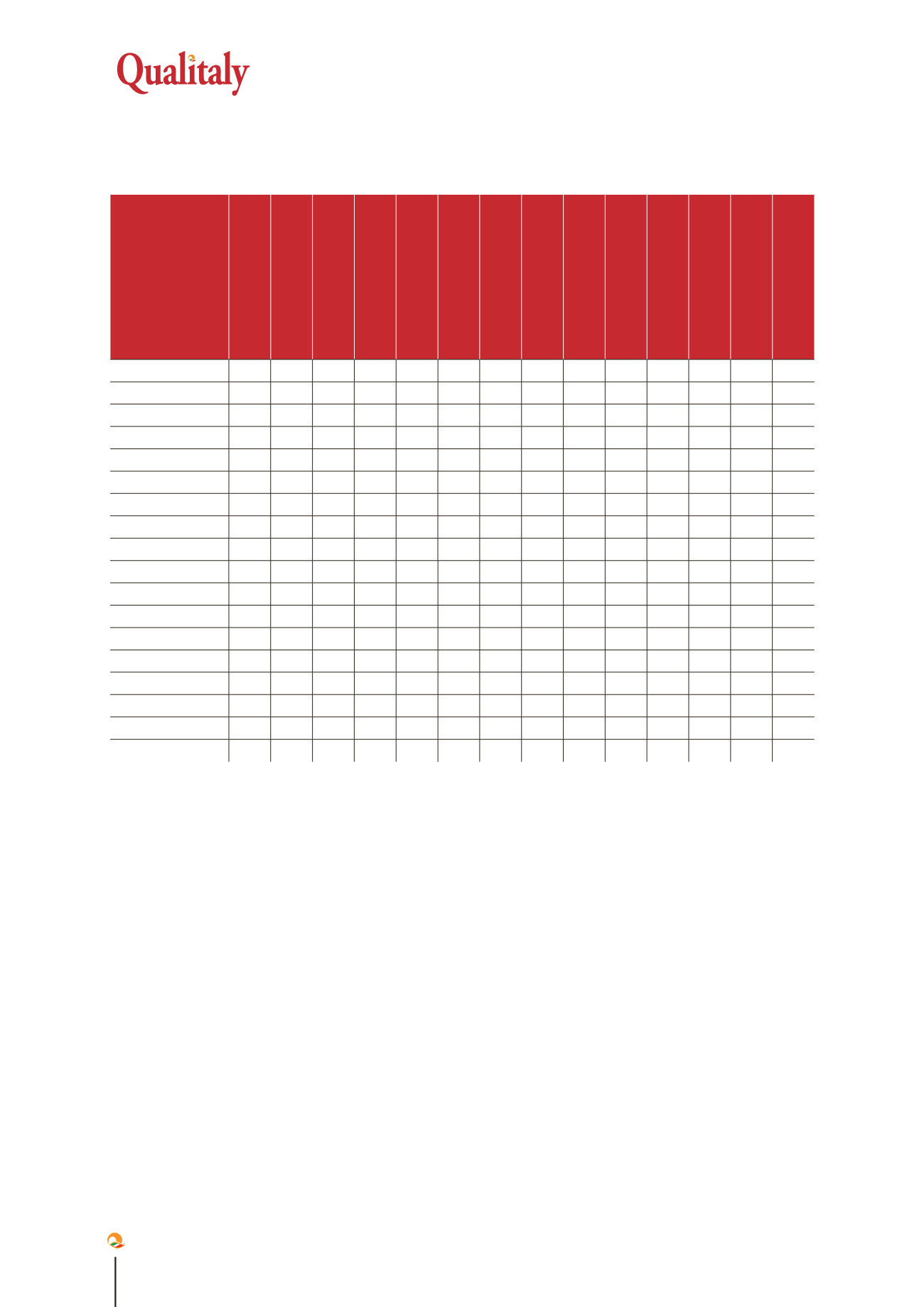
ALLERGEN FRAMEWORK IN APPLICATION OF EC REGULATION 1169/2011
MENÙ
CEREALS WITH GLUTEN
EGGS AND EGG-BASED
PRODUCTS
SHELLFISH AND SHELL-
FISH-BASED PRODUCTS
FISH AN FISH AND
FISH-BASED PRODUCTS
PEANUTS AND
PEANUT-BASED PRODUCTS
SOY AND SOY-BASED
PRODUCTS
MILK AND MILK-BASED
PRODUCTS
WHOLE FRUIT AND DERIVED
PRODUCTS
SESAME SEEDS AND SESA-
ME SEED-BASED PRODUCTS
CELERY AND CELERY-BASED
PRODUCTS
MUSTARD AND MUS-
TARD-BASED PRODUCTS
SULPHITES
LUPIN AND
LUPIN-BASED
MOLLUSCS AND SHELL-
FISH-BASED PRODUCTS
An example of how to create the allergen chart (source: Marco Valerio Sarti)