


 66 / 76

DEC. JAN. 2018
VI
MAGAZINE
climate change on the food chain.
Reduced production:
From cereals to
milk the increase in temperature and
drought decrease yields.
More water.
The increase in the need
for artificial irrigation, with increased
costs and disputes on access to
sources.
Timetable change.
Freezing, flooding,
drought can delay sowing and
harvesting.
Vocation crisis.
The heat shifts
the production range to higher
latitudes and altitudes, where the soil
can be poorer and less suitable to
accommodate new crops.
More diseases.
The movement of
global goods combined with climate
change leads to parasites from distant
countries. Like the Asian bedbug,
which attacks fruit trees. Cold winters
and hot and humid summers promote
proliferation.
Fishing risk.
The increase in the
temperature of the seas promotes
diseases and acidification of the waters
and threatens the coral reefs, essential
to the life of many fish species.
______________________________
BOX
ABANDONING THE PLATE: THE
PRODUCTIONS AT RISK
Coffee and chocolate
For the heat, the crops move to
altitude (the most affected is the
precious Arabica) and diseases
increase; blight being the first.
Drought has plagued large producers
such as Brazil. According to experts
over the next few years there will
be less coffee, with a worse taste
and a higher price. The increase
in temperature and the decrease
in rainfall in tropical areas is also
penalising cocoa crops.
Wine
The vintage 2017 is one of the most
scarce of the postwar period with a
-26% decrease of the production on
2016, although Italy maintains the
world record.
Australia by 2050 could lose 70% of
the suitable areas, while parts of the
Californian vineyards were devastated
by fires. Winemaking climbed to
almost 1200 meters in Morgex and La
Salle, in Val d’aosta, for example.
Cereals
For each increase of the average global
temperature, there is a 6% decrease in
the yields of wheat and 10% of rice,
while the increasing temperatures
make the corn fungus Aspergillus
flavus more aggressive responsible
for the production of aflatoxins. The
Asian marmorata bug has affected the
cultivation of soy and maize.
Olive oil
The olive growing range (in the
last ten years in Valtellina has risen
from zero to 10,000 plants) and the
parasites, Xylella and Mosca olearia
increase. For 2017 a recovery is
expected compared to the disastrous
harvest 2016, but there is still a drop
of 11% of the production of olive oil
compared to the average of the last
decade.
Seafood
Climate change leads to an increase
in carbon dioxide in the seas and the
consequent acidification of the water,
which threatens many edible species
with shells, molluscs and oysters.
Tropical species that threaten habitat
are entering the Mediterranean.
Honey
The 2017 Italian production was more
than halved compared to the average,
recording one of the worst results
for at least 35 years. According to the
National Beekeepers Consortium,
Acacia Honey was reduced -30% on
2016 and -70% on 2015; the Millefiori
-20% and the production of linden
from Emilia Romagna is almost
zero. The crops of the uplands and
mountains are better, such as chestnut.
_______________________________
AT PAGE 18
IN DEPTH
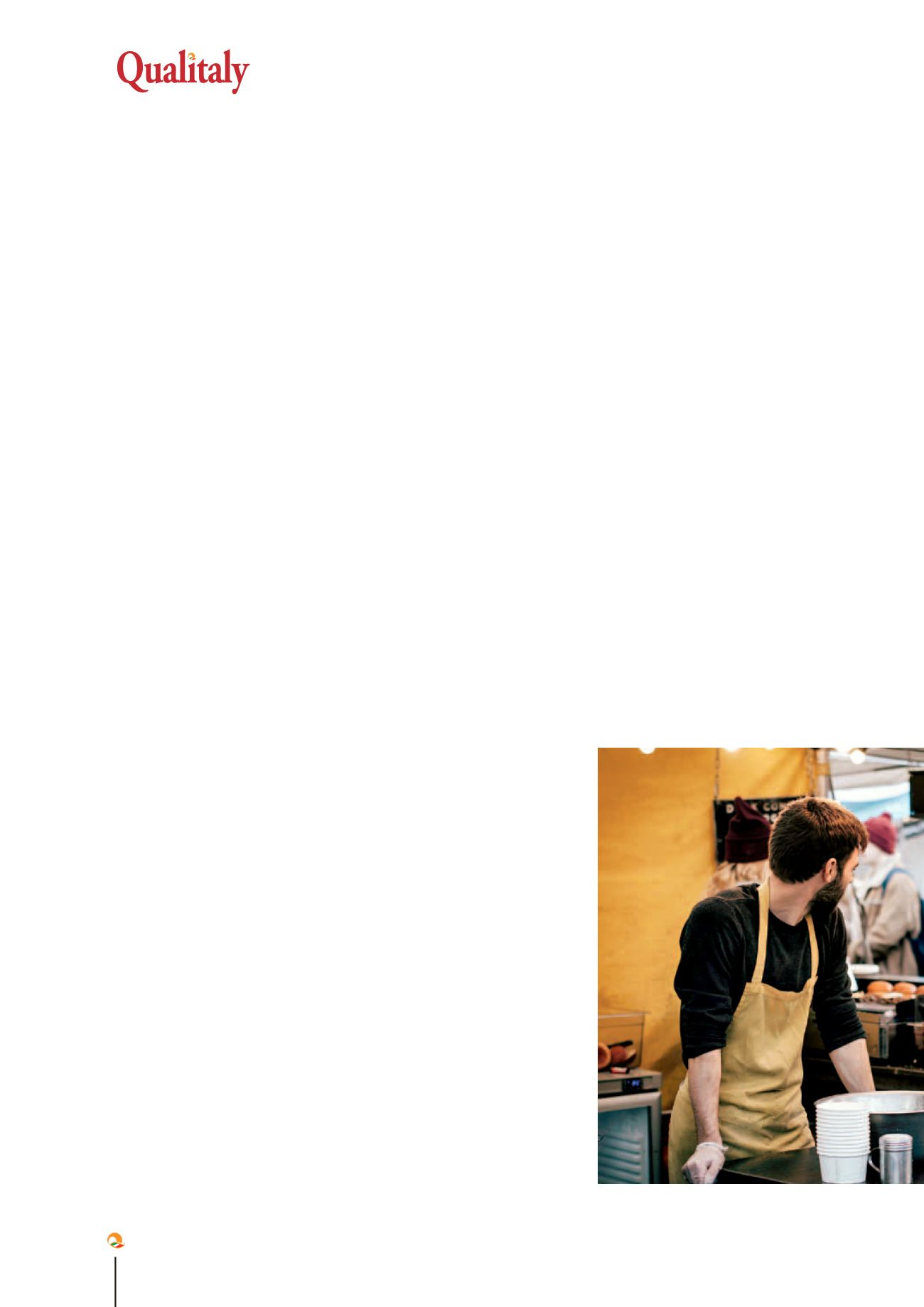
Street Food: No
to improvisation!
Whether a mobile stand or take
away premises, the administration
of street food is a delicate activity in
the sanitary and logistical areas.
By Elena Consonni
Whether you buy from a food
truck or from a fair stand, from the
takeaway restaurant or from a well-
equipped Piaggio Ape (three-wheel
light vehicle), Italians like to eat in
the street. And they do so in country
fairs, where they take their evening
stroll, but also during the workday
lunch break.
According to a Coldiretti/Ixe’ survey,
more than one Italian in two (52%)
loves to buy street food. From
arrosticini to oranges, the traditional
Italian dishes are the most popular
(69%), followed by international ones,
such as hot dogs (17%) and ethnic
offerings (14%). Foreigners also like
this way of eating: more than six
foreigners out of ten – during their
stay in Italy – shop for food that is
bought in 39% of the cases straight
from street markets and vendors,
which for tourists, represent the most
genuine form of sale.
But street cooking is not an easy
art. The lack of space requires
reorganisation of cooking in various
ways; the inconvenience does not
relieve the fulfilment of food safety
obligations, in order to always
guarantee the health of the consumer.
Fortunately, Italian restaurateurs
(and especially those prepared for
it) do not lack the imagination and
organisational ability to find the best
solutions to cope with the drawbacks
of this opportunity to diversify and
do business.
THE ARCADES HELP
For example, Marco Serpieri decided
to take advantage of the window of
his restaurant Antares, a self-service
located under the large arcade of Via
Vittor Pisani in Milan (the avenue
leading to the Central station), not
only to offer to the many office