


 67 / 68

OCT. NOV. 2016
XV
is produced in the traditional way,
it comes into contact with various
so-called “processing aids”, such as
albumin, gelatine, casein, isinglass
and animal glues. These are all
proteins used to clarify wine and to
remove all particles. Well, vegan wine
does away with these “processing
aids” and with the rubber gloves used
to pick the grapes.
In spite of these apparent cons,
many winemakers (even those who
produce very specific wines) have
decided to change their production,
either entirely or in part. This is the
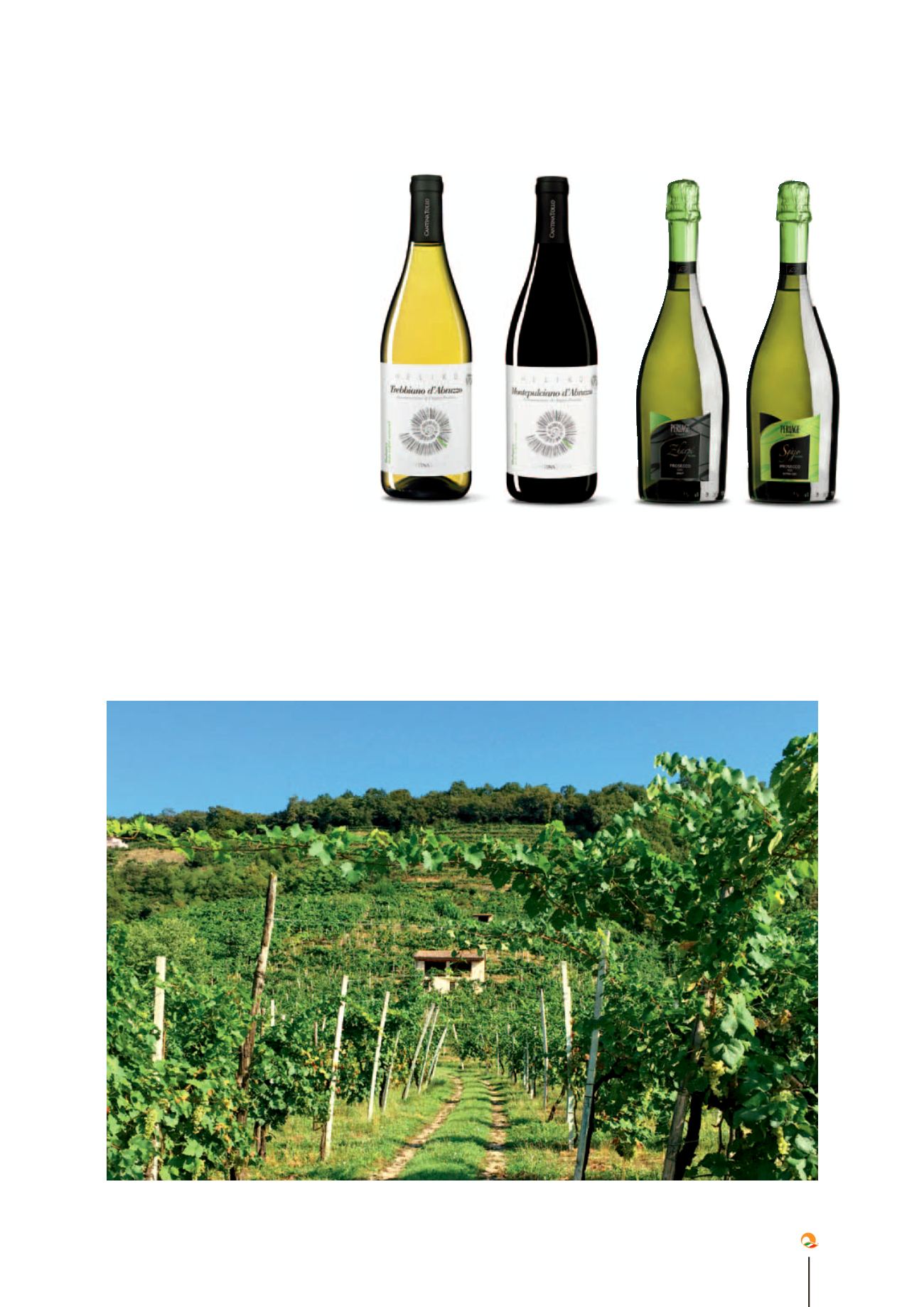
case of Perlage s.r.l. based in Sovigo,
an area devoted to the production of
Prosecco Docg.
“For over 30 years, our company
has been growing and producing
organically. Then, in 2011 we
decided to change and entirely
converted to a vegan production”,
says CEO Ivo Nardi. “The first
vegan Prosecco was Sgajò followed
by Zharpì, the first 100% vegan
Prosecco DOC Brut”.
How is working in a vineyard
affected when producing vegan
wine?
In the vineyard and in the cellar,
we work our grapes according to
the principles of vegan philosophy.
We start from the terrain: in order
to obtain safe healthy grapes, it
is important to preserve the soil’s
biodiversity”, says Andrea Gallina,
wine expert at Perlage. “It is a long
and complex job that allows us to be
Vegan certified by the certification
and inspection company CSQA”.
From Veneto we move down to
another region famous for its wines,
Abruzzo. This is where Cantina Tollo
is based, one of the most important
wine producing companies of the
Centre-South. It is a cooperative with
about 800 members, who provide
grapes from 32,000 hectares. They
have added a vegan line to their