


 65 / 68

OCT. NOV. 2016
XIII
habits. It is useful to add that while
for other diets, for instance the
coeliac diet, the non-contamination
of food is essential to avoid
sometimes serious health problems
to customers, including a vegan dish
within the menu is easier to manage.
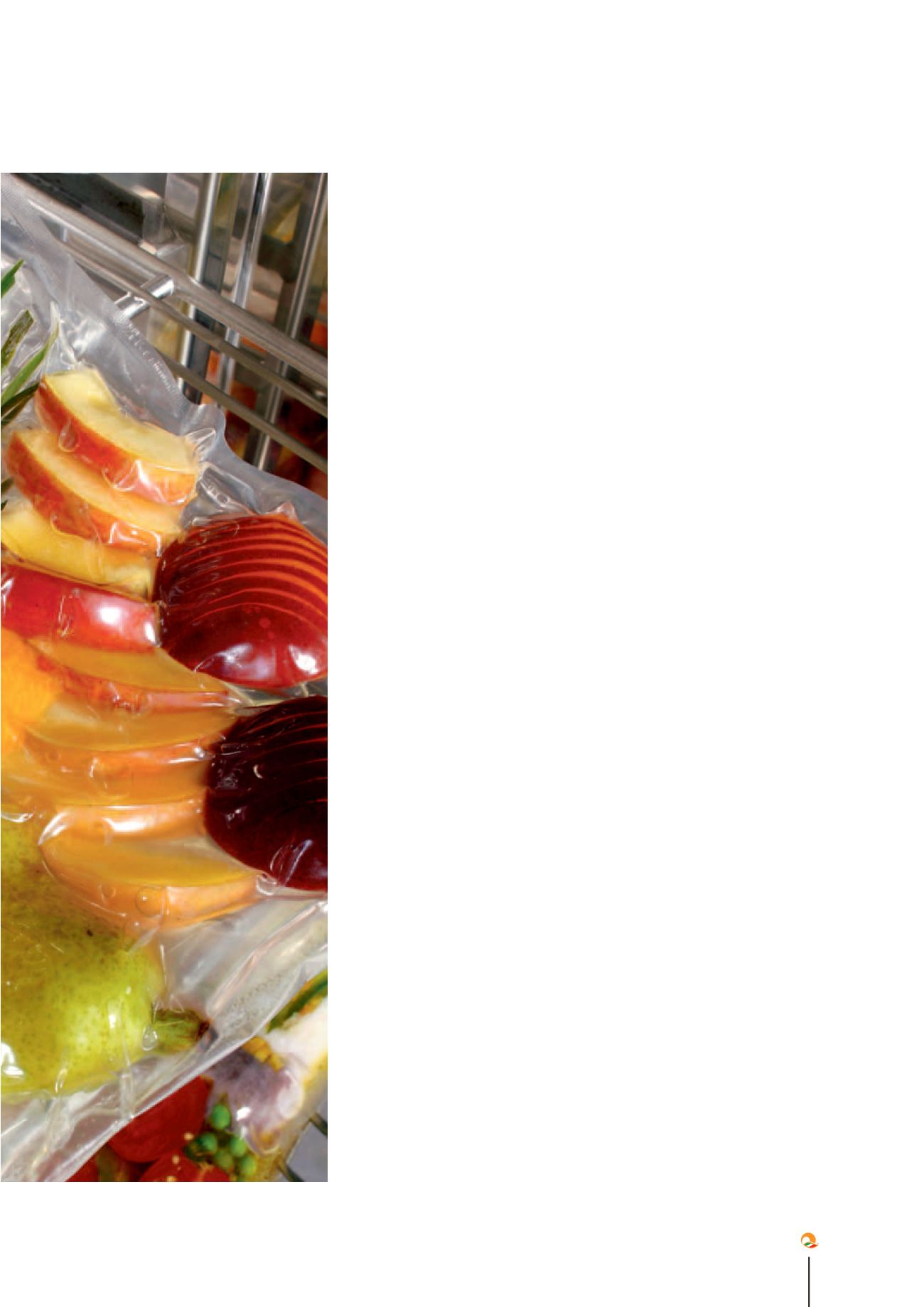
Sous-vide cooking combined to the
cook & chill technique is by far the
best method for the restaurateur
who wants to try his hand at vegan
cooking. It allows the simultaneous
preparation of the vegan dish and of
other dishes without contaminations
of flavors and maximizing the
organoleptic qualities of vegetables”.
GOOD AND IT DOESN’T BREAK
THE BANK.
Sous-vide cooking has
further advantages. It guarantees
savings when buying supplies of raw
food products, because they can be
bought in advance and transformed
when most convenient. Sous-vide
cooking extends foods’ shelf-life by
three times, because the absence of
oxygen dramatically slows down the
proliferation of bacteria and food
oxidation.
“even during the cooking process”,
concludes Chiara Roncagli, “there
is a consistent saving of money,
because the single dose airtight
pouches, previously quick chilled,
can be regenerated together with
other dishes, avoiding energy waste
and optimizing service times”.
AT PAGE 32
The Vegan Diet –
What to Eat
What are the risks and benefits and
what types of food can vegans eat?
By Barbara Panterna*
First of all, I would like to clarify
the major difference between “
being
vegan
” and “
being
vegetarian
”. I
think this is necessary because every
day I see a lot of confusion amongst
patients, who believe the two things
are the same. When talking about
human nutrition,
vegetarianism
encompasses various dietary patterns
that firmly
exclude
all types of
animal meat
. There are a variety
of reasons why people choose to
become vegetarian: ethical, religious,
hygiene-related, health-related and,
more recently, as the result of a
trend.
It is also useful to know that there
are a few vegetarian patterns. They
share the no-meat principle, but are
quite different from one another:
Lacto-ovo-vegetarianism
excludes
all foods resulting from the
direct killing of all animals (land
animals as well as fish, mollusks
and crustaceans), but allows
consumption of all plant foods,
indirect animal products (i.e. milk
and dairy products), eggs, honey,
algae, fungi and bacteria
(
such
as lactobacillus
supplements). This
type of vegetarianism is the most
popular in the Western world.
Lacto vegetarianism
is similar to
lacto-ovo-vegetarianism, but also
excludes eggs. It is very popular in
the Indo-Asian tradition.
Veganism
excludes all animal
foods (meat, fish, mollusks,
crustaceans) as well as all products
that come from animals, such
as milk, dairy products, eggs,
honey and other bee products
(royal jelly, etc.). It only allows the
consumption of foods made from
plants.
There are also different dietary
patterns within veganism:
Raw Veganism
only allows plant
foods cooked at the maximum
temperature of 46 °C (drying is
allowed). This dietary pattern
mainly includes fruit, vegetables,
nuts and seeds, cereal and
sprouted legumes.
Fruitarianism
is a dietary pattern
that only allows the consumption
of juicy fruit (such as apples) and
fruit vegetables (such as tomatoes).
All living parts of plants are
excluded, i.e. roots (like potatoes),
stems (like celery), leaves (like
lettuce), flowers (like artichokes)
and seeds (like beans). This
patterns originates from the belief
that fruits were the original diet
of humankind and plants must not
be harmed nor killed in any way
because they are living beings just
like animals.
Benefits
Excluding meat products from the
diet in favour of vegetarian foods
containing key nutrients (alkaline
nutrients, mineral salts, vitamins and
fibres) can dramatically reduce the
risk to develop dyslipidemias, type 2
diabetes, obesity, hypertension and
some forms of cancer. The risk to
develop cardiovascular illnesses is
also lower, as it generally is for all
diseases linked to the high intake
of some of the nutrients contained