



 56 / 68

AUGU-SEPT 2015
VI
hand the United States at the beginning
of the cocktail room is now a must in
many restaurants.
But be careful. Among the Millennials,
there is a trend opposite to the gourmet
food that is the basic nutrition of athletes
living supplements and packaged
food and fast, and do not find time to
plan meals. Widespread in the United
States, she is catching on here too. It
presupposes an emotional detachment
from the food we often cited reasons
for health-conscious. “It is necessary
that the experience of visiting the
restaurant becomes itself therapeutic,
starting From the welcome with a smile.
There is so much emphasis on food,
on furniture, but first of all there is the
relationship, service, human contact”
explains Colussi. “The restaurant of the
future will be a place where not only
eat, but taste, you know people, places
and products and we learn things. Will
become an increasingly experiential, not
only gain on the menu.”
So off to the cooking courses at any
level, where it also teaches how to
make pizza, theme nights where they
sell products selected in the course of
their work, books, music. Recalling that
investing in quality and transparency
pays. Young people are also willing to
spend more for quality. In the future
probably we will eat less, but better.
The food is a commodity today, but for
the distinctiveness there is stillroom for
growth. To this it must be reorganized
the way to propose not only flat, but the
ingredients that make it up.
“These new requirements - concludes
Colussi - if will translate into proposals
of catering and communication methods
adequate, are opportunities that
can make interesting and believable
the restaurant world, and become a
significant competitive advantage for
those who will know how to play well.”
As I catch the Millennial: 10 straight
for the restaurant owner
- Always have a vegetarian option on
10% of Italians are vegetarian, and many
more have reduced meat consumption.
Without a viable alternative, we risk
losing not only a client, but the entire
table of friends.
- Working with the territory the local
or regional level, especially in southern
Italy that has suffered less immigration
and more parochial, more is required.
It is the time to forge relationships with
small wine producers in the area to
capitalize on these needs.
- From forestry to certify the certifiable
organic, use of renewable waste
treatment, creating an image “green” is
useful to attract younger customers.
- Transparency is essential especially
for the ingredients “hot” as those of
animal origin: indicate origin and tell, if
possible, the source, the people behind
the breeding, some info on suppliers,
will reassure customers.
- Lightness health consciousness as well,
shares fruit & vegetables, fair share of
animal foods: are all factors to be taken
into account when you create your own
menu.
- Cooking class, Chef opportunity is
aspirational for the profession 44% of
Millennials surveyed. 21.9% attended a
cooking class. Why not propose one at
the restaurant?
- The service in the foreground the
human relationship as always makes
the difference, even more so at this
time in which to communicate a dish
or ingredient differentiating aspect
becomes especially with Millennials
foodie.
- Quality at the right price the money is
short, especially among young people:
but for the quality they are willing to
spend more. But it is never without
reason.
- Visibility into the network From
TripAdvisor, to monitor, to Groupon, to
manage if it is felt useful to get visibility
for a short time, the App booking
guides, from Facebook and Instagram,
is absolutely essential to be known by
young people.
- Not only food restaurant of the future
benefits from being a place where not
only you sit and eat, but you do meet,
you know, you buy, you listen and
AT PAGE 22
;MXL WTMGIW GSSOMRK
KSIW KPSFEP
8LI KSSH KPSFEPM^EXMSR FIGSQIW
E GYPMREV] QIPXMRK TSX XLEROW XS
XLI [MHI ZEVMIX] SJ WTMGIW EZEMPEFPI
ERH QEOIW ORS[R RI[ JPEZSVW MR
WYVTVMWMRK HMWLIW &IPS[ WSQI GYPMREV]
WYKKIWXMSR
BY MARIELLA BONI
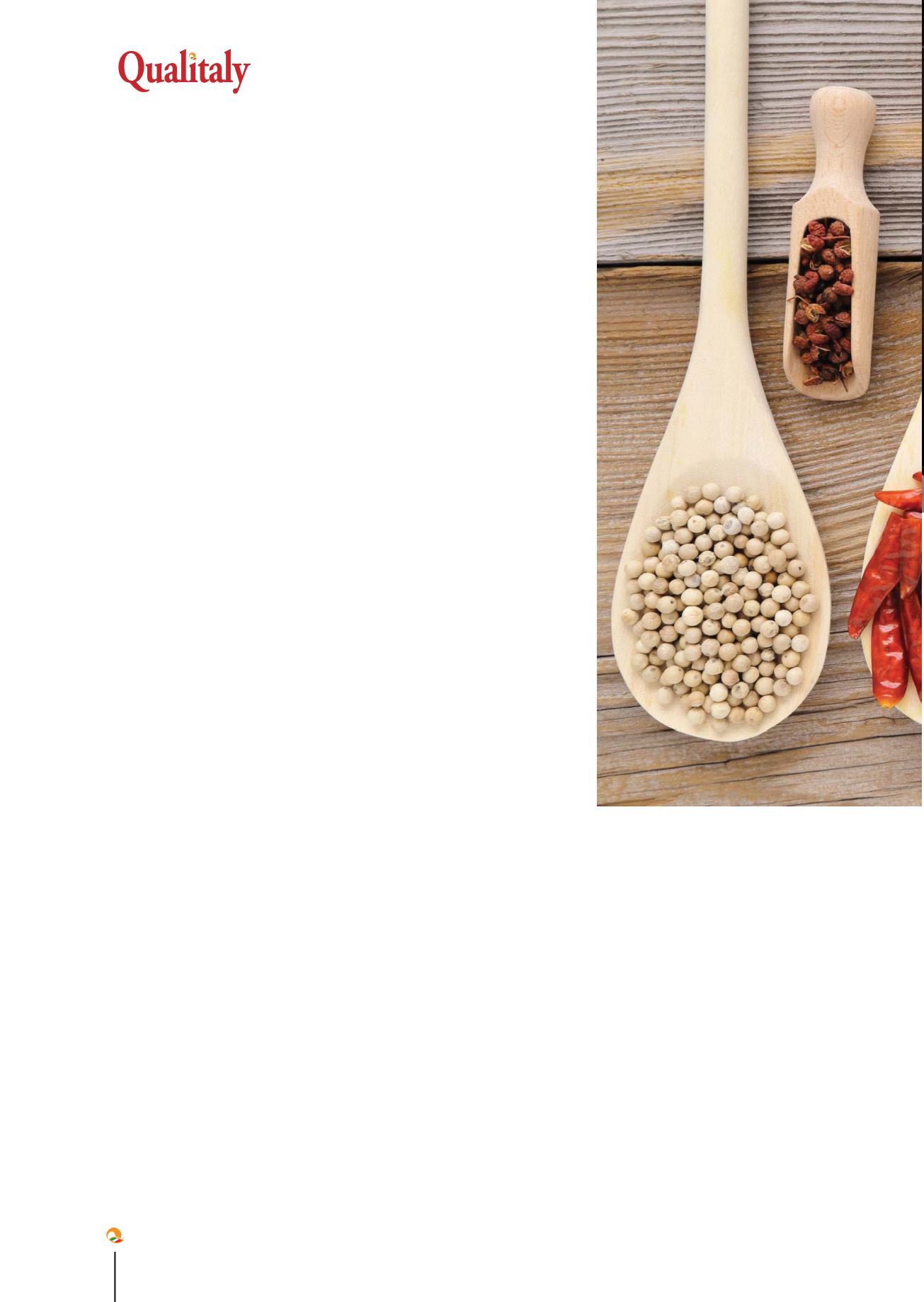
Vanilla, nutmeg, cardamom, turmeric,
lemon grass, curry ... exotic spices
are now entered by force in recipes
professionals. About a kitchen
increasingly globalized, a culinary
melting pot that, under the heading of
“fusion” has determined the success of
spicy dishes, sometimes reinterpreted
according to our own tastes, where the
lemon Amalfi plays its role protagonist
of a dish with oriental ginger or cumin.
IN THE NAME OF GLOBAL KITCHEN
professional market now has dozens
of spices, some familiar, others less so,
which - used wisely - can constitute a
new and winning countless recipes.
Says Paolo Barbagli, sales manager of
Grocery & Food, historic importer and
marketer of spices of San Piero a Sieve
(Florence), “Merit of the proliferation
of ethnic cuisine, the globalization of
markets, the tastes of the Italians who
are open to the world, is the fact that the
consumption of spices in catering halls.
Of course, we are far from consumption
of Asian countries and the Middle East,
but here too there is an increase of about
4% per annum. In particular, we note
that in recent times the interest of the
4(.(A05,