




 66 / 72

april- may 2015
XII
At page 34
In the pantry
red wine vinegar, white
wine vinegar and vinegar of
modena
A wide range of quality branded
vinegars Qualitaly and Tavola Viva, all
obtained without the use of genetically
modified ingredients or derived from
genetically modified organisms.
Red wine vinegar 6% acidity looking
clear, shiny, deep red color and
harmonious taste is ootenuto Italian
wine. It is packaged in liter bottles PET
or glass for the brand Viva Table.
White wine vinegar 6% acidity pale
yellow appearance has clear and
harmonious taste. Gotten by Italian
wines is a liter bottle in PET or glass
table Viva brand.
Red wine vinegar acidity 7.2% by
selected wines are aged in wood and
made from selected Italian wines. A
Clear appearance, harmonious full taste.
A brand Qualitaly, is packaged in bottles
of 0.5 liters white Ligustro. Shelf Life is
36 months.
White wine vinegar acidity 7.2% by
selected wines bottled white privet 0.5
liters. Made from Italian wines selected
is aged in wood and straw yellow, with
taste harmonious, full.
Also proposed in sachet
Balsamic Vinegar of Modena PGI
brand Tavola Viva made from wine
vinegar, grape must be concentrated,
caramel. Dark brown has bittersweet
taste, balanced, pleasant characteristic.
Bottled Ligustro white 0.5 liters. Even in
sachet brand Qualitaly.
At page 36
Let’s make them on
grilled
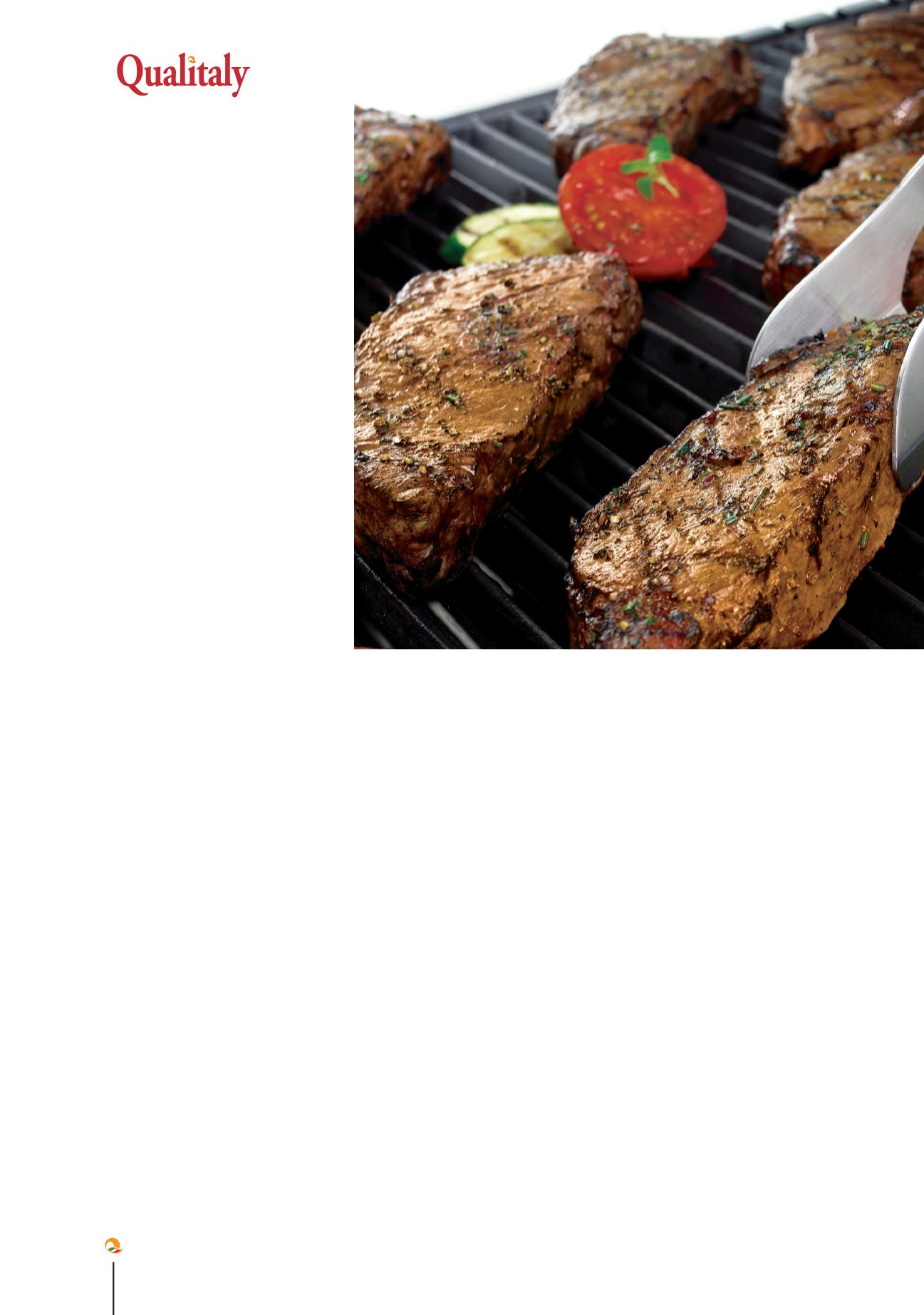
Barbecue or grill? Coal or gas? All the
secrets for a perfect barbecue!
By ELENA CONSONNI
Few things are fun, even the restaurant,
how to share a hearty grilled meat,
fish, vegetables. This type of cooking is
deceptively simple, there is still much to
learn, beginning with the terminology.
“First of all - says Gianni Guizzardi
owner of I Signori Del Barbecue, a true
expert in the field - we must clarify
the difference between barbecue and
grill. The barbecue always has a lid
for closing, while the grill is open. No
linguistic subtleties, because cooking
techniques and recipes are different.”
The barbecue being closed works more
or less like an oven and cooking takes
place both for the direct contact with the
grid for the hot air circulation inside the
machine. For this reason it is suitable
to prepare a full menu, including bread
and cakes.
The barbecue, however, is not an oven.
“First of all - explains Guizzardi - occurs
the phenomenon of drop of liquid
contained in food. Then ventilation
is natural and is made with fresh air
coming in from the outside and therefore
is humidified. The moisture content
depends on the weather outside. For this
reason, even the cuts of meat to long
cooking are tender and sweet soft.”
COAL, WOOD OR GAS? Guizzardi
admits to not being completely agree
with what some chefs. “Only apparently
- says - the coal and wood give more
flavor. The coal does not give it at all,
it would give the wood maybe a little
bit more, but not if used to the state of
embers. To give the typical aroma are
liquids that exude from the food and
run off through the grid to finish on the
grill or on the floor of heated steel. The
other aromatic component is given by
the rifling, which must be brown, never
black. Effects can be achieved using the
most intense smoke accessory.”
Are then made some technical
considerations, important for
professional use: gas ensures constant
conditions of temperature throughout
the service, even with many covered,
while in order to have the same
continuity with the charcoal, the initial
charge of coal must be sufficient,
otherwise you risk the interruption of
preparation. The gas is adjustable and if
the fires are more than one, in different
areas can set different temperatures,
which is impossible with coal. The
alternative is the electric grid. “The grids
- precise Guizzardi - can be defined as
such if they have a system that provides
the dripping liquids that tissues release
in cooking.”
The choice of the type of fuel, however,
may not be as free. There are constraints
to be respected. “In professional
kitchens - explains Roberto Del Mistro,
Santanna company, supply company for
magazine