



 64 / 76

FEB. MAR. 2018
IV
Bonduelle and Orogel for frozen foods
and to McCain and Lamb-Weston for
potatoes. Of course, we have also
been able to contact local suppliers,
but we have made them immediately
aware of collaboration with Cic. This
is the case, for example, of Rispo,
a Campania industrial company
specialised in the production of typical
products for traditional Neapolitan and
Mediterranean restaurants.
So on the whole is association
with Cooperativa Italiana Catering
positive?
I would say more than positive. We
joined in 2000, driven by the need
to be able to count on a purchasing
power that we could not have achieved
individually. And we are aware that it
was a natural and fundamental step
to give energy and continuity to the
company.
AT PAGE 14
IN DEPTH
FromAmarcord
to comfort food
Revisited traditional dishes adapted
to modern tastes, a warm but not
invasive welcome, a vintage and
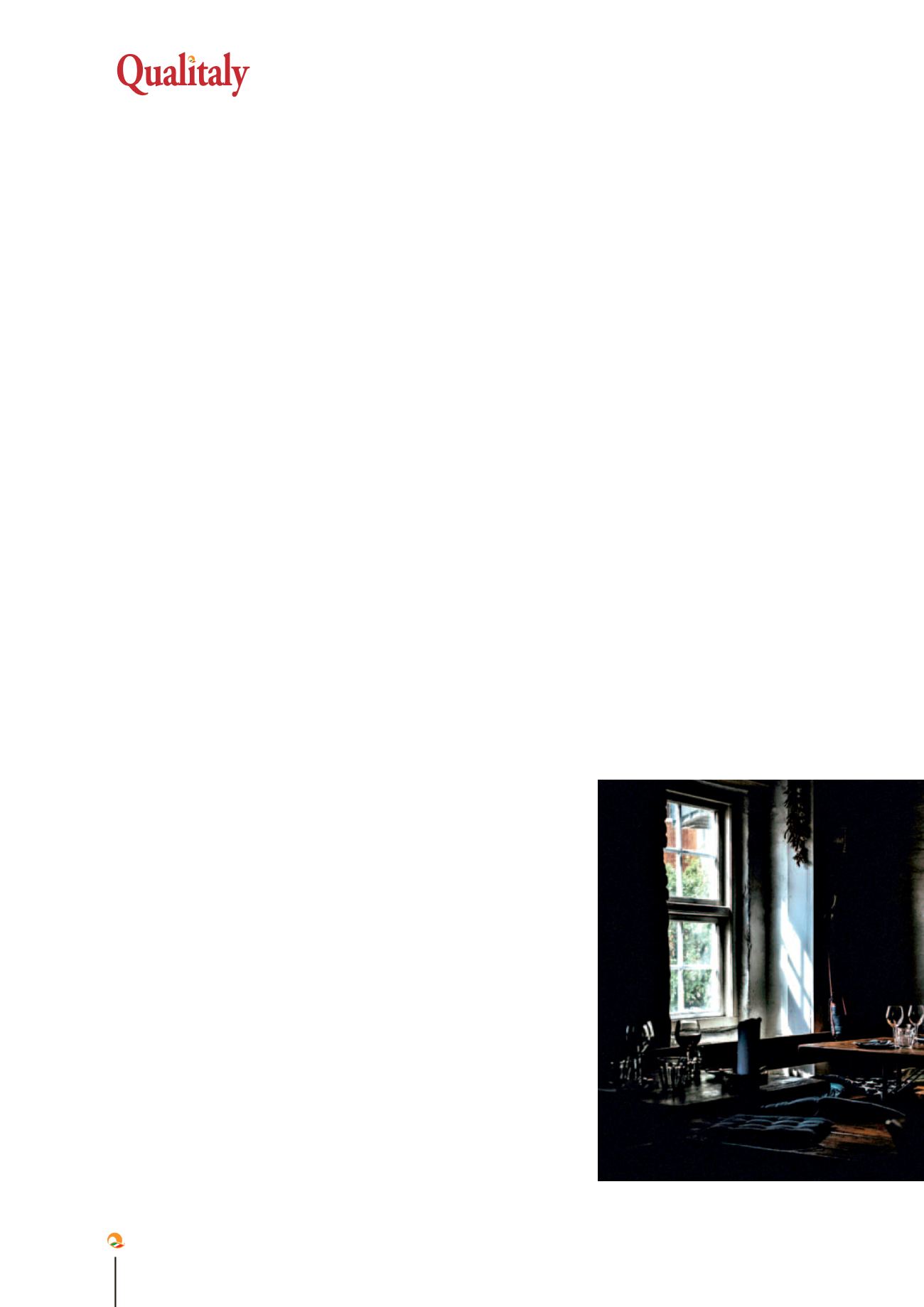
comfortable environment: this is how
the “old” trattoria in the 4.0 era is
being revived
By Anna Muzio
Vintage is trendy not only in fashion,
but also in food. Because the simple,
traditional dishes of when we were
children are those that intrigue us
and make us feel at home. Even at the
restaurant.
It is the Amarcord effect (“io mi
ricordo - I remember”, from the
masterpiece by Federico Fellini)
known for some time to food industry
marketing that has revived brands,
logos and antique packaging. And
today it is in the restaurant: we eat
out more and more but at the same
time, or just for this reason, we
choose traditional dishes, those that
our mother or grandmother used to
prepare us as children.
There are two keys that trigger this
effect: familiarity and simplicity.
These dishes are associated with
pleasant memories. It’s an escape,
a refuge in the past or period when
things seemed simpler. Everything,
explain the psychologists, is in that
deep relationship between food and
emotions as told by Marcel Proust
with his madeleine cake, the biscuit
soaked in tea that evokes the world
of his childhood, and indeed the
entire narrative of research. But
memory is not just personal, because
everyone has their own. It can also be
collective, and Italian cuisine is really
full of footholds to arouse memories
of real or supposed infancy,
grandmothers with hands in dough or
Sunday trips out to the restaurant.
FROM THE MADELEINE TO
COMFORT FOOD
That which lies behind the tradition
of the family-run Italian trattoria, in
the confused beginning of this 21st
century in search of reassurance, has
revived itself, renewed, with success.
And, like any self-respecting trend, it
has taken an English name; comfort
food. Which in reality in the Anglo-
Saxon world is a little different: food
that gives consolation and a sense
of well-being often associated with
childhood, yes, but typically rich in
carbohydrates and sugars, for instant
gratification that ultimately makes us
feel worse.
The Italian version is instead
based upon great dishes from the
Mediterranean tradition, taken from
the various regions freely and without
particularisms, and reinterpreted
according to contemporary tastes:
with selected ingredients, often
sourced locally. With that appreciated
touch of craftsmanship, perhaps
enhanced by an open kitchen that
shows the preparation. Paying
attention to as little waste as possible,
even using “poor” or “recycled”
ingredients. Add to this a warm and
familiar decor and a friendly welcome
that makes you feel accepted and at
home, without being so. Also because
their is neither time nor desire to
cook at home, yet something is
missing. Finally, last but not least,
good value for money, with even an
honest and “welcome” bill.
Starred restaurants also understood
this, and it is no coincidence that
they are opening their “bistrò”
versions (the idea came to the French
years ago) of their award-winning
high quality restaurants (expensive,
for both the client but also for the
manager).
TWO SUCCESSFUL EXAMPLES
We asked the souls of two Milanese
restaurants that embraced this
philosophy, Dario Rossi, chef and
partner of Trippa, and Riccardo
Danesi, partner of Dersett, as they
turned to a kitchen that plays - also
- on the “Amarcord” factor. Starting
from a different approach: Trippa’s
very personal “we thought (with
partner Pietro Caroli) to propose a
cuisine that we liked, without doing
market analysis,” a more rational
and business-oriented approach
is that of Dersett “we focused on
communication and played with the
theme of comfort food, and it worked:
we talked a lot about ourselves “.
TRIPPA, A VIRAL SUCCESS
To come here you have to book
weeks before. Yes, because the
word (and the awards earned this
year) have made Trippa, which
opened in 2015, one of the most
desired restaurants in Milan. The
mixed clientele “from families, to
management, to VIPs” looks for a
convivial atmosphere and excellent
cuisine “I do not want to impress with
the technique but with the knowledge
and the story of the product.”
“I come from the gourmet restaurant
side that tired me, I was looking
for a more solid, substantial cuisine
- says Diego Rossi -. Our model
was the typical Italian trattoria.”
In the menu there are traditional
dishes from all over Italy, made with
seasonal ingredients, along with three
or four off-menu proposals “with
complete freedom”, more personal
and “difficult”. The logic of waste
MAGAZINE