



 65 / 68

AUGU-SEPT 2015
XV
intended children, the preserved meat
contain significant amounts of salt
really.
Among the most common foods bread,
pizza and milk products are those that
bring the greatest amount of salt in our
bodies without us can appreciate.
HOW MUCH, HOW AND WHEN. The
most accredited medical organizations
are developing campaigns to reduce
salt. The main objective is to create
awareness because, actually, the actions
of individual citizens are simple to
apply. Think, for example, the amount
of salt that you feel right to add to a
plate of pasta in cooking. Well, in just
three days you can get used to the taste
as half the salt that we are used to.
It is clear that we have very little power
in relation to packaged food or pre-
cooked, as well as on those prepared by
others. But a wise choice in purchasing
can afford the very important changes.
Get used to a lesser amount of common
salt in food, decrease the consumption
of bread and choose the one produced
with a lesser amount of salt; Avoid salty
foods clearly for reasons of industrial
and profit. Do not hold the salt on the
table. Learn the use of alternatives to
salt such as spices or gomasio. The latter
is a powder constituted for 10 parts of
toasted sesame and a whole sea salt. It
spreads a fair amount and very soon you
get used to its taste.
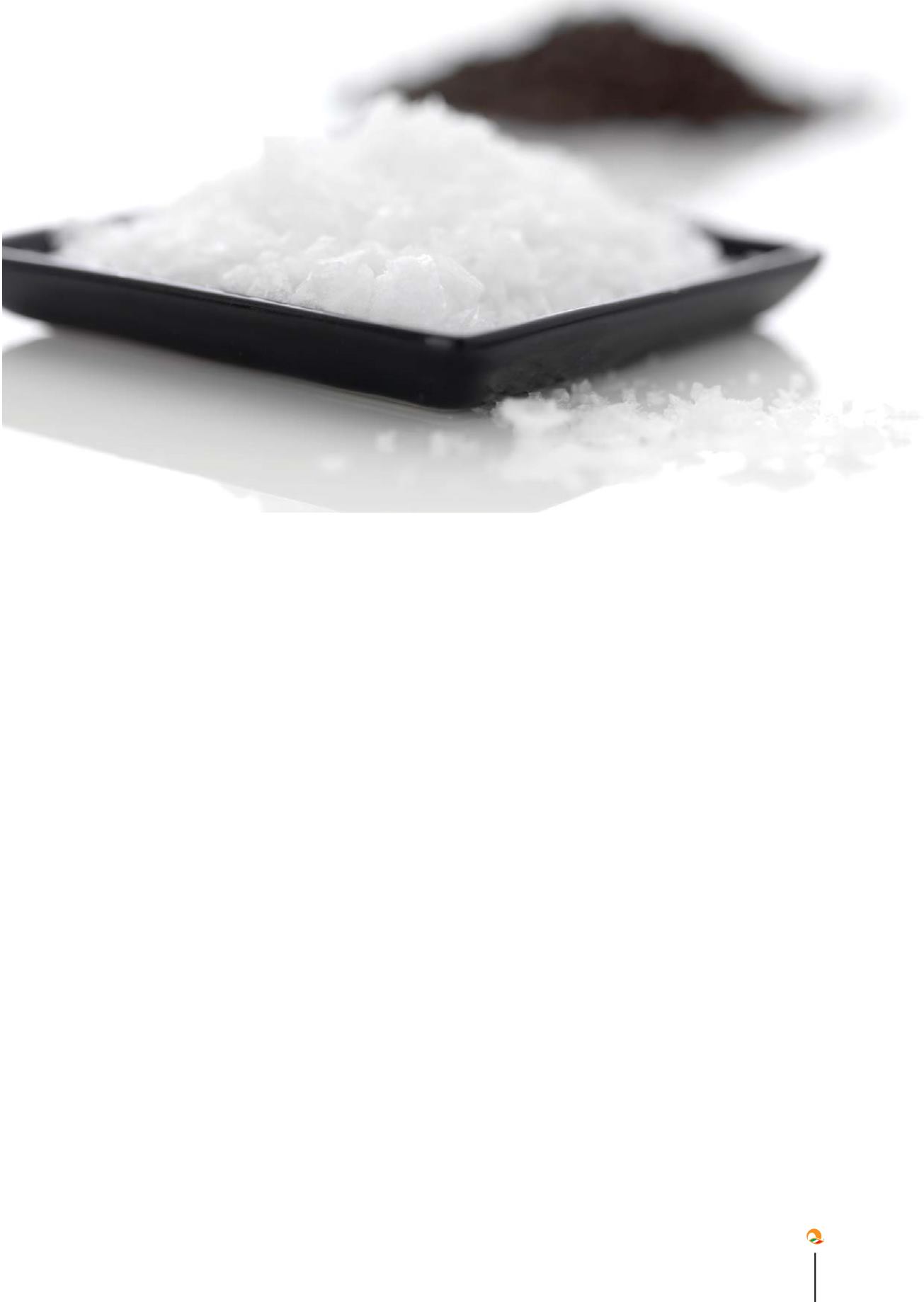
THE BEST SOLT. The market offers
different types of salt. Meanwhile, it
distinguishes between sea salt and
mineral salt or rock salt. Among the
latter, then, we have developed a wide
variety of offers.
Sea salt is essentially in three forms:
refined, iodized integral. The defect of
the refined salt is leaking any type of
slag, which brings us to pure sodium,
therefore, in greater quantity for the
same weight. Iodate came into vogue
in the late 60s in the Western world in
order to overcome certain deficiencies
of iodine in the waters of some areas.
The sea salt is not refined and carries
with it a greater amount of minerals and
active ingredients. Among these is the
best to use, both for reasons of health of
healthy food.
Among the alternatives terrestrial
we find the salt extracted from the
mountains of different corners of
the earth, probably able to confer
particular flavors to foods. Combining
the principles of ethics and health
with the modernity of globalization
we can say that these special salts can
be used for specific and occasional
culinary solutions. In everyday sea salt
locally sourced certainly it respects
the principles of biodiversity, food and
health ethics.
SOME PRACTICE IDEAS. Learn the use
of spices that can flavor foods in an
original way. Coriander, garlic, onion,
curry, sesame, fennel seeds, lemon are
just some of the proposals that you can
experience.
Next to these would be interesting to
learn the use of algae, keeping in mind
that some of these, very easy to find
on the market, are particularly rich in
sodium and therefore should be used in
moderation.
Learn and propose, as an alternative, the
use of gomasio.
Do not put the saltshaker on the table.
In restaurants it might be useful to
highlight the menu that there is salt on
the table because we do not recommend
adding to health reasons. It may also
indicate that more healthful alternatives
are available.
Small card rooms, which describe the
properties and characteristics, could be
a distinctive attention to detail.
AT PAGE 46
8LI WXVSRK
TIVWSREPMX] SJ
VIH [MRIW JVSQ
0SQFEVH]
%QSRK XLI PEVKIWX TVSHYGIVW SJ [MRI
0SQFEVH] FSEWXW KIRYMRI TIEVPW
EQSRK XLI VIH [MRIW XLEX WXMPP LEZI WS
QYGL TSXIRXMEP XS FI I\TVIWWIH
By Pietro Cinti
As soon as you say Lombardy wine,
you immediately think about bubbles,
particularly in Franciacorta whose fame
has quickly crossed national borders,
or the Garda and Oltrepò Pavese. Less
well-known heritage of red wines
from Lombard, showing areal smaller,
with a very local consumption and
a level of knowledge total premium.
However, even in the Lombardy red