JUN. JUL. 2013
XIII
and creamy that blend well with a
wide range of wines. Sauternes and
Roquefort or Caciotta and Bonarda,
depends on the portfolios and the
“maître aux cheese”, which suggests
combinations and different flavors
depending on the seasons and
temperatures.
Fresh goat cheese
The goat has a sweet and sour taste,
characteristics that are combined
with quince jam. Alternatively, you
can match them with a honey aroma
and scent of lavender, heather and
rosemary.
Ricotta
Ricotta is a by-product of milk, not
really a cheese. It is made from whey
that remains after making cheese. It
has a taste that goes well with sweet
products such as cocoa, sugar and
dried fruit, and often serves also in
the manufacture of pastry. It also
combines the citrus honey, clover or
alfalfa.
Growth or Stracchino
They are creamy cheeses, aroma and
flavor of milk, sweet and slightly
sour, vaguely resemble yogurt. Both
are accompanied by tasty sweet-spicy
mustard from Cremona.
Robiola
The soft cheese is a soft cheese that is
well matched with acacia honey. Like
most dairy products with a soft texture
can be enjoyed along with a mustard
mandarins.
Mozzarella
The fresh most famous Italian cheese.
It has a soft delicate taste. For the
offered version, it must be chosen
fresh and maybe in its craft versions.
It’s not a surprise that goes well with
red tomato jam, while for an unusual
combination, fine the sour taste of
mustard, plum or orange marmalade.
Pecorino
The paste of the cheese is white if the
cheese is a few months of seasoning,
later it takes a faint straw color.
It’s compact, friable and soft when
it’s young, with hints of milk and
vegetables. It has a slightly spicy taste.
The cheese is served with orange
marmalade and acacia honey.
Grain (Parmigiano cheese)
The maturing of the grain varies from
one to two years. It has a delicate and
fragrant aroma. For the combinations
you can choose a combination with
typical products of the areas of
origin as Pumpkin mustards, pears
and grapes. For the less seasoned
grain you would prefer jams of green
tomatoes or onions, seasoned with
more than a taste of honey from the
mountain: chestnut and rhododendron.
At pAge 40
A revolution
called tablet
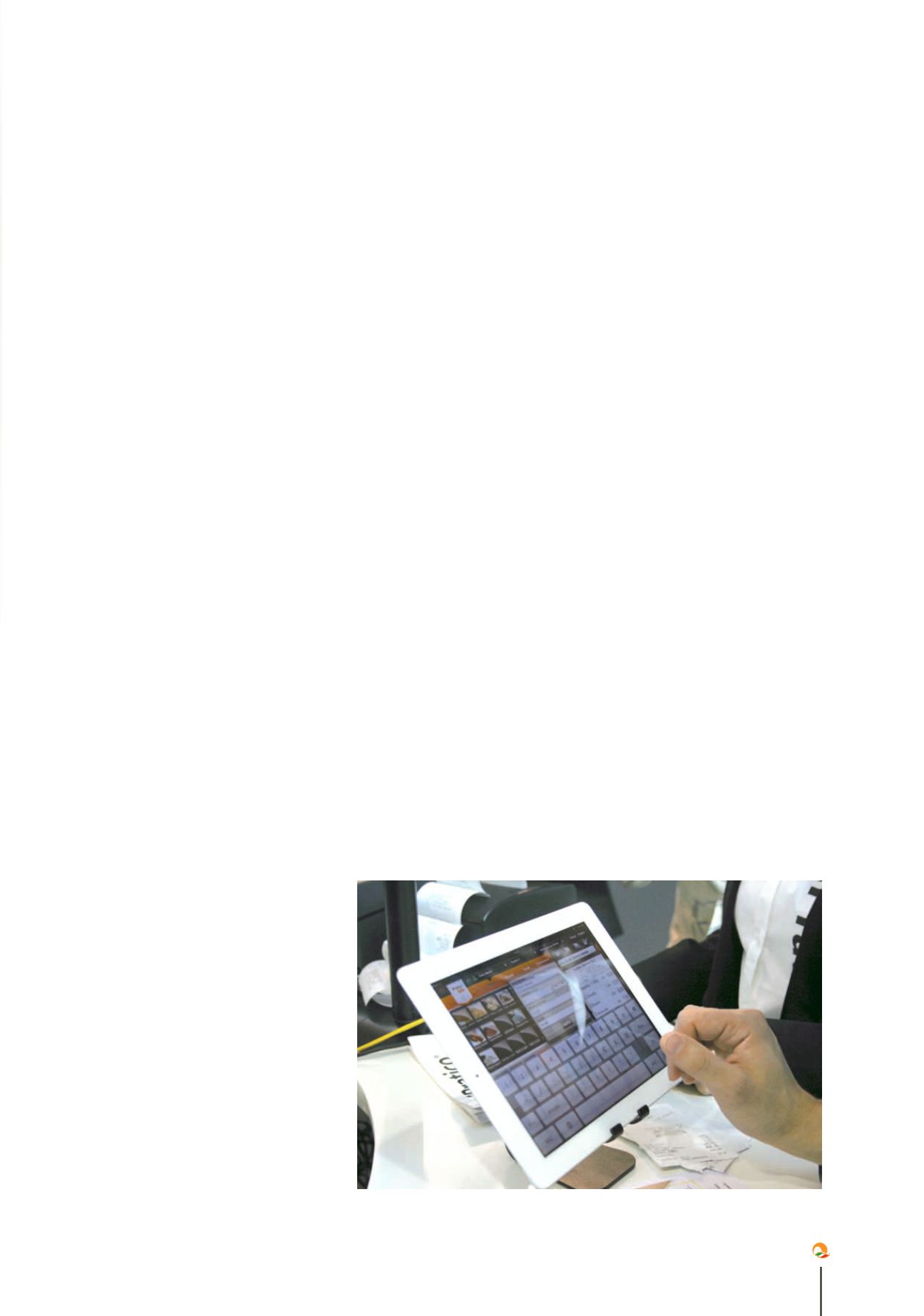
Simple, versatile, easy to use.
With specific applications, the
iPad replaces the handheld for
the orders or the classic menu
with multimedia and informative
with no limits to creativity.
by Carmela Ignaccolo
The technological developments of
recent years are well known: the
advent of smartphones and tablets has
indeed revolutionized many habits and
practices.
And this, of course, also affected the
restaurant industry.
First of all, thanks to the spread of
app with geolocation systems that
allow potential customers to find and
book the local area best suited to their
needs.
A good example in this sense, and the
rest of the polis, which allows users
to choose a restaurant based on the
type, location and any promotions
enabled. The news also involved the
app right on the front of operations,
“undermining” systems already in
use. How, for example, is going to
handhelds for the orders, have a
special management software capable
of transmitting and work orders, issue
invoices, organize staff and handle
stocks.
Only up to three years ago, in fact,
these were the undisputed future. But
then, with the gradual spread of the
tablet (iPad, specifically), things have
changed and traditional management
have had to deal with a very fierce
opponent, because handy and easy
to use. Here then is that so many
companies have gradually started to
develop applications specifically for
the new media.
And so today it is always easier,
download an app on your tablet and
have access to a management in all
respects, which performs the functions
of a PDA.
It is also more evolved because it has
a more graphic interface of appeal and
very often customizable.
However, the functionality gradually
acquired by the tablet does not end
here.
The paper menu is likely to be
increasingly threatened by this new
generation of competitors.
In fact, the transfer of your local
gastronomic proposal on an electronic
device saves a lot of paper and at the
same time offers the possibility to
update, modify and enrich the menu
in a timely manner, perhaps adding
new pictures, adding video, providing
nutritional information on the dishes,
or suggesting combinations.


